Minneapolis' own Cult Film Collective recently released a zine of "top 5" lists contributed by its membership. The zine is only being distributed to members but I decided to reproduce my list here on the blog. The whole zine was a great read and hopefully we'll be able to do another one next year. If you're in the Twin Cities area, you should definitely be checking out the CFC and consider joining!
Crime films and especially French crime films have always been part of my regular viewing but shortly after becoming a Cult Film Collective member, I started delving more deeply into the genre. This kind of noir cinema has a dedicated and passionate following and my pursuit led me to discover some fantastic programming work in theaters from San Francisco to Melbourne. Whether the following are truly "cult" films is probably a matter of debate, but they are some of my favorite underseen gems I've logged since the joining the CFC.
A suspenseful, well composed cat-and-mouse game through Parisian nightlife. Henri Decaë shows off his total mastery of street footage and driving sequences, Barney Wilen's jazz score adds an additional layer of cool to everything, and Lino Ventura is as watchable as ever as the film's protagonist who also happens to be the bad guy.
Genre banger from Jacques Deray that's heavy on cool 60s vibes and location work. There's not a deep mystery at the heart of Symphony but the suspense is exquisite through multiple dialogue free sequences that allow space for actions and motivations of the various players to unfurl.
Lino Ventura and Marlène Jobert team up as an unlikely pair of crime solvers who scour Paris to find the missing witness in an organized crime trial. There's a degree of 70s cynicism at play here but the focus on the city as a character, shoe leather detective work, and the chemistry between Ventura and Jobert distinguish Address from the rouge-cop films that were gaining ascendency at the time.
In contrast to Address, The Cop is entirely in the tradition of morally ambiguous, pessimistic, anti-authoritarian crime fiction and does it as well or better than many films that would follow. Unrelentingly hardboiled, gritty French crime from Yves Boisset with a cast so stacked that somehow Bernard Fresson doesn't even make the poster.
Police Python 357 takes the plot outline from The Big Clock, mashes it together with Magnum Force, and infuses the result with a powerful dose of Melvilleian honor code sensibility. The beginning simmers but the finale is an eruption of insanity. Yves Montand fully commits to the action hero role, but not without some internal torment and it's a joy to watch.
Enjoyed this post? Never miss out on future posts by following me
Hello and welcome to the first post of 2024 actually about things I watched in 2024. I'm not big on resolutions and I haven't exactly made any regarding film, but I have been watching a fair amount of movies and trying to tackle some big gaps in my personal filmography. I did make a private "Criterion Challenge" list for myself to try and knock out some of those movies we're all supposed to have seen by now. I'm historically abysmal at this kind of thing but I'm hoping that my stubborn ass can handle one viewing a week dedicated to watching some of the best regarded films of all time. We shall see.
I've been reading Rui Nogueira's Melville on Melville which is a book-length interview with Jean-Pierre Melville written in a similar framework to Hitchcock/Truffaut. If you are a Melville fan, there's a lot to enjoy. Melville comes off as funny and highly opinionated and seems happy to discuss his films while not holding them up as overly precious. He was frequently looking towards the next film and the next project. One thing Melville mentions in his introduction is that he considered himself one of the last living witnesses of pre-war American cinema and that no one will be left who can truly assess those films in context once he is gone. Melville says " The film which was released in April 1934 - between March 1934 and May 1934 - isn't at all the same thing when you see it now some afternoon or evening at the Cinematheque." He goes on to describe his own films similarly. This is, of course, somewhat ironic to me as many people and critics failed to appreciate Melville's films when he was still alive and Nogueira's purpose in conducting the interview was to document and elevate Melville's work for an international audience. Still, it did get me thinking on seeing films in context and why I still find it personally important to get out to the theater for new releases. I'm a film dork so I'll forever believe in finding underseen, underappreciated gems of past years and will always love and appreciate the work repertory theaters and programmers are doing, but there's still something I find compelling about getting out to the new movies and especially at the theater with an audience. Part of it is continuing to believe that great movies are being released every year and there's also a sense of conversation with the films and the audience I don't get watching movies at home. It's something I really, truly missed when the cinemas shut down and I'm still thinking about it now.
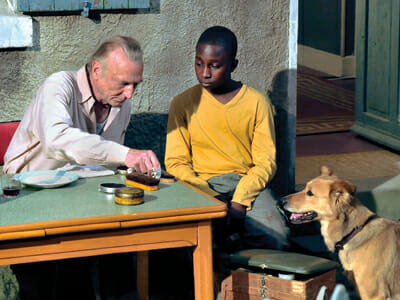
Le Havre(2011) - I've been meaning to watch Le Havre pretty much ever since reading about when it came out and just never found the moment until now. I was partly inspired by having seen Aki Kaurismäki's Fallen Leaves (more on that below) and also because I was having an epically shitty day. Le Havre turned out to be a truly potent remedy for my dark mood blending stylistic turns from classic Hollywood and Cinema du Look with Kaurismäki's class conscious humanism. I found it totally engrossing and only wished I could recognize more of the societal solidarity of Le Havre in my own life.
Growing Up on Broadway (1984) - My wife turned me onto this educational short about menstruation featuring kids who were in the Broadway production of Annie. It's a wild time capsule, the kids are terrific, it is VERY clearly sponsored by a feminine hygiene product company. I've since shared it with a few people and you too may be the kind of viewer who finds this weird and charming. Either way, it's on youtube and only 17 minutes long.
Pasha(1968) - Late last year, I finally bit the bullet picking up some French blu-rays that I believed were English language friendly and region agnostic. I wouldn't recommend it for a single purchase, but it went rather well for me to pick up a handful of films. One of the main drivers to go through this was to finally see Georges Lautner's Pasha starring Jean Gabin. A lot of Pasha is a re-tread of world weary Gabin trying to maintain his code of honor while society indulges in cowardice and decadence. He grimaces disapprovingly at everyone from hardened criminals to his wayward colleagues on the police force and scenes like the "Les Hippies" nightclub sequence are clearly objects of derision. At the same time the consistently pulsing Gainsbourg soundtrack and some of the more lavishly styled mod settings betray Lautner's obvious enthusiasm for the fashion of the times. Late-career Gabin might be a victim of his own inertia but there are still some ferocious sequences of action and violence that propel Pasha along its brisk 85 minute runtime. Interestingly, Pasha's frank police violence was a subject for possible censorship from the French government and along with Un Conde provides a template for the gritty cop movies American's largely see as kicking off some years later. I've never seen it confirmed that these European films were a direct influence on Friedkin, but I feel like it is a distinct possibility.
Katherine(1975) - Made for television joint with a terrific cast (Sissy Spacek, Art Carney, Henry Winkler, Julie Cavener, etc.) directed by Jeremy Kagan (The Big Fix). The style is unconventional mixing "interviews" with principal characters, flashbacks, image collage, and interstitial scenes of Spacek's Katherine addressing the audience directly. It's a compelling story loosely based on the actual life events of Diana Oughton who became increasingly radicalized until her death in an accidental bomb explosion. I don't think the film necessarily approves of political violence but it does paint a sympathetic portrait of leftist ideologies and the societal injustices that inspired them. I think this could make for a terrific physical media release (maybe along with some other Kagan films) but I have to imagine the music rights alone (heavy with 60s hits) would make it challenging.
Underground(1995) - I was mildly obsessed with Emir Kusturica's Black Cat, White Cat in the 90s and I can't recall if I never got around to watching Underground or I tried and failed to get into it or it just fled my memory over the years. However it went down, this was essentially a first time watch. I know probably less than I should about the politics and history of former Yugoslavia and yet that's never really prevented me from being immersed in Kusturica's visionary chaos. The music and the visual richness is something I associate with all of his work, but the satire seems distinctly more pointed here. I would absolutely love to see this theatrically one day and someone really ought to program a retrospective Kusturica series. Just putting that out there programmers, you don't even need to credit me.
Local Hero(1983) - Another long time watchlist denizen finally attended to. I wasn't ready to purchase a copy of Bill Forsyth's (arguably) best regarded film and yet it's availability online or via my local library has been a little erratic. I'm actually glad for the delay as I've dipped my toes into less heralded portions of Forsyth's filmography which both grounded my expectations and attuned me to his particular brand of quirk. Forsyth doesn't make bombastic, laugh out loud comedies and somehow I invariably burst into laughter at some dryly observed piece of absurdity in each of his films. Local Hero may in fact be the best one I've seen so far. It's silly, it's gorgeous, and it's wonderfully performed (it's hard for me not to be enthusiastic about this cast but they're particularly good). The socio-economics of billion dollar fossil fuel companies trying to buy up coastline and the local enthusiasm for those corporate dollars isn't what I would call rigorously interrogated in the film but there's such strong streams of both melancholy and wonder that I think Local Hero gets it mostly right on an emotional level. Now I probably am ready to buy a copy.
Payday (1973) - Here's another one that's been on my radar for a while I was finally, finally shoved off the ledge hearing Brian Sauer sing its praises on Jason Bailey's and Mike Hull's A Very Good Year podcast. Maybe it was the country western music context that held me at arm's length for so long and it's definitely not widely available but hol-ee shit do I wish I had gotten around to this one sooner. Absolute killer 70s bummer country outlaw banger with Rip Torn playing the scumbag as only he could play it. It's truly a gorgeous looking film for all of its ugliness (directed by Daryl Duke of The Silent Partner) and the music is incredible. This is fully screaming for a good physical media release and there are plenty of boutique labels that could do it justice. Take my damn money already.
The Counterfeiters of Paris(1961) - Another of the import discs I picked up, this is a total charmer of a caper comedy with some of my favorite faces of French cinema. It's not incredibly inventive but there are some sequences of almost lyrical beauty that are overachieving for the material. Louis Page (Any Number Can Win) handles the camera duties here and Gilles Grangier elected to shoot a combination of excellent locations in addition to some gorgeous sets - particularly the labyrinthine townhome occupied by Bernard Blier's character. Combine this with some Michel Legrand music and some engrossing counterfeiting sequences and you have the makings of a new favorite comfort watch for me. I know Kino is releasing a different Grangier/Gabin collaboration so I'm looking forward to picking that up and hope that more are on the way.
Shadows in an Empty Room(1976) - I've been dragging my feet on this one for ages but I wanted to try to fit something in for Giallo January. Shadows' giallo bona fides might be questionable but that's fine as I actually prefer when it leans into hardboiled cop action. On that count it's positively ferocious with doors getting smashed in, fist fights, foot chases, and an unhinged car chase set piece that ranks up with some of the best. Extra points for shooting down a helicopter with a revolver and threatening an infant with a switchblade.
The Spirit of the Beehive (1973) - It's difficult for me to write anything terribly sensible about some of these pillars of arthouse cinema that I'm only now getting around to. Beehive is positively stunning and it's inconceivable that this was Erice's debut feature. I was so totally blown away by Ana Torrent's presence and performance in Carlos Sauros' Cria! and here is an even tinier Ana every bit as magnetic as any child actor you're likely to see. I can't say that I fully appreciate the political context around Beehive but I do feel like this captures the absolute horror of childhood so beautifully that I think relating to the film was easy for me. Can I add this to my list of favorite Frankenstein films? I hope so.
Nightcap(2000) - I picked up the Twisting the Knife set from Arrow to continue on my Claude Chabrol journey I embarked on last year. I think Nightcap (I really do prefer the original title, Merci pour le Chocolat) was my favorite of the four but they are kind of a whole in my mind. Nightcap features another perfectly chilling Isabelle Huppert performance as a wealthy chocolatier who's relationship to her pianist husband and unmoored stepson is tinged with typical Chabrol-ian darkness. The four films in the set (The Swindle, The Color of Lies., Nightcap, and The Flower of Evil) are all preoccupied with wealth, ambiguous familial relationships (with suggestions of incest), old secrets, cycles of history, and death. At this point, I find them all compulsively watchable and the Arrow sets are filled with great features and discussion of Chabrol's work and themes. I'm also finding myself weirdly nostalgic for the period in which these films were made - the late 90s into the early 2000s. It looks a lot like the world does now, just without smartphones or the internet permeating every interaction people have. I'm probably just getting old but still...
The Breach(1970) - Many of the contributors to the Knife set referenced The Breach as well as the other Hélène films and I was actually able to find a copy of this one. I can understand why a lot of people site this as a favorite amongst the Chabrol thrillers. The opening is rather startling and while it simmers for a good hour it eventually erupts into a wild, chaotic finale. Unlike a lot of his more mannered works, the sex and violence and corruption happens on the screen instead of merely referenced. I have grown to appreciate Chabrol's exercises in ambiguity but The Breach delivers in a much more tangible sense. This didn't connect with me right away but has kind of grown in my estimation the more I think about it and the more I think about how it relates to his other films. The copy I saw did not look terrific and there really needs to be a restoration and re-releasing of his films from 1968-1978. I'll be the first in line to buy that box set.
True Confessions(1981) - Adapted from John Gregory Dunne's novel by Dunne and Joan Didion and directed by Ulu Grosbard (with Owen Roizman as cinemtographer, so the same team as Straight Time), True Confessions is a tremendous if somewhat understated LA noir that seems to be overlooked or forgotten. Loosely based on the Black Dahlia Murder, Confessions is filled with all the hardboiled favorites: murder, prostitution, porn, abortion, crooked cops, even worse politicians, and offers the added wrinkle of the LA Archdiocese. I think Duvall and De Niro are both excellent and while there's not much physical resemblance, they do play their brotherly connection convincingly. It's often contentious but it's believably tender at times. The rest of the cast is overflowing with faces I like to see: Charles Durning, Burgess Meredith, Kenneth McMillan and even some small parts for Dan Hadeya and James Wong. The lack of operatic violence would have put me off of this one when I was younger and story doesn't wrap up particularly neatly. Still, I see this as nearly Chandler-ian and it didn't keep me from being drawn in. Hard recommend if you go in for this kind of thing but it might not win over the casual crime film viewer.
Theatrical Screenings!
Winter Kills(1979) - Kicking off the new year with this supremely nutso sort-of spoof that never quite lives up to the promise of its totally bananas cast. The tone feels all over the place and despite the short runtime, the narrative manages to ramble a fair amount. For all of its faults, I have to say I was consistently entertained throughout - it's outrageous enough and so stacked with people I love to see that it would be hard not to engage with it. Looking at the production history of Winter Kills, it's clear that this thing was going off the rails from jump and it's impressive they even managed to get a complete film finished. Who Killed Winter Kills is totally worthwhile to look up if you've seen the film. We got to watch the fancy new Tarantino-driven 35mm print thanks to the fine folks of the Cult Film Collective.
Fallen Leaves(2023) - Not outrageously inventive nor does it depart significantly from Kaurismäki's other work but it's so excellently done that I didn't mind a bit. The setting for Leaves is ostensibly Helsinki around 2021 or so but it's also filled with anachronistic touches that place it almost within an alternate reality or something. I could see myself revisiting this to tease out more of those threads. It's also incredibly sweet, melancholy, filled with movie posters I'd love to own, and Maustetytöt (featured prominently in a terrific narrative breaking section) has gone into steady rotation at Kino Ventura central.
The Zone of Interest(2023) - I can see how some might be put off by Glazer's remove but I still appreciate his approach to attempting to document something about an atrocity that's nearly incomprehensible in its immensity. What can you say or show in a film that even approaches the enormity of evil of the Holocaust? I'm not even sure how to write about this film other than to say Glazer's craft is exceptional and I wish he would make more movies.
The next few movies are all things I've seen so far as part of the Film Independent Spirit Awards screenings at the Walker Art Center. They do these screenings every year and they are free to Walker members, Film North members, and Film Independent members. The screenings only occur in Minneapolis and Los Angeles so if you live in the Twin Cities, I can't encourage you enough to take advantage of them. If you became a Walker member and only used it to go to the screenings, I think that would still be a great deal.
All Dirt Roads Taste of Salt (2023) - This is the debut feature of Raven Jackson, known for her photography and poetry, and it feels very much like a film made by a poet. Evocation of fragmented sense memory, the fluidity of time, the specificity and incompleteness of our recollection all feature prominently. It is very lyrical in its execution and beautiful as well. I think how audiences connect with it is going to be highly subjective - there isn't much traditional narrative or character study to hang on to. Either you will be utterly lost, appreciate it from a distance, or find yourself transcended. The sound design is tremendous, definitely a theater watch if at all possible.
All of Us Strangers (2023) - Andrew Haigh is a director I should really follow up on as while I've not seen all of his films, I tend to really appreciate the ones I do manage to see. There was a lot of hype around Strangers and I think it's deserved. It's an incredibly intimate and evocative portrait of isolation and loss with some outstanding performances from its scant cast of essentially four actors. Not many dry eyes left in the theater during this one and being an old sad-sack, I loved the soundtrack as well. Last year around this time I was watching Paul Mescal in Aftersunas part of the Spirit Awards so that's two positively heartbreaking turns from him.
A Thousand and One (2023) - My favorite category for the Spirit Awards is "best first feature" (as well as their Cassavetes award) and I'm continually astonished at how accomplished some of these debut features are. I went into A Thousand and One mostly blind and I found myself drawn in immediately between its recreation of 90s NYC and the captivating performance from Teyana Taylor. This is both a heartfelt and sometimes brutal family drama but it's also a story of gentrification and the dissolution of place and a culture. The balance between these two was struck rather deftly and while it doesn't let anyone off the hook, it doesn't feel strident in how it approaches the subject. Taylor is already a star but this definitely put her more squarely on my radar. I was really impressed with Josiah Cross as well. This should be a bigger hit and more people should see it, but I do see it is available on prime video so hopefully it gets some more eyeballs. I will 100% be looking for the next feature from A.V. Rockwell and you should too.
Upon Entry(2022) - Another debut feature, this time from Spain, and a fantastic illustration on how to cleverly assemble a taught narrative on a budget. It's the story of a young couple attempting to move to the US when they get held up by immigration. Their initial confusion gives way to desperation, rage, and despair as the interrogation they're subjected to becomes increasingly Kafkaesque. This was a really smart film and I doubt I would have seen it otherwise so I'm glad for that.
Last Yearwhen I sat down to write my annual review of my own movie watching and writing, I was working my way out of a bit of a filmic funk. My overall viewing numbers were down, I hadn't been writing consistently, and I was feeling disengaged from what I love best about movies. Thankfully, going through the exercise of writing about what did bring me cinematic joy helped turn things around for me. This year has been my most consistent year of writing in this space and I also wrote for other online and offline publications who were generous enough to have me. I'm happy to say that I have a ton of ideas for pieces and projects for the coming year and while time is ever a precious resource, I'm grateful to be in a place of creative enthusiasm. As always, thanks so much to everyone who reads, likes, responds, or otherwise offers any bit of encouragement to keep me plugging along. It truly means the world to me and I hope you do find a movie recommendation or at least a kindred spirit amongst my ramblings.
Movies are Back, Baby! I keep hearing this from film journalists and while it has a lot to do with Barbenheimer, it's true in a smaller way for me too. As I write this, I'm sitting at 400 Letterboxd diary entries for 2023 and I know my theatrical attendance has been solid throughout the year. 400 is not an insane number of movies compared to many die-hards and more dedicated reviewers than myself, but until I can abandon my 9-to-5 this is a sweet spot for me. Most of the films I saw were from the US and could be considered dramas which is fairly typical for me. France was the clear runner up for country of origin and the crime/thriller genres were well represented (though they do cross over with the dramas).
Directors - My most-watched director for 2023 was Claude Chabrol and it wasn't close. I watched 15 Chabrol films over the year and almost all of them were new-to-me. Chabrol is a fascinating character in his own right and was such a prolific filmmaker that I will no doubt be watching many of his films for years to come. Despite my interest in French film, I (sheepishly) admit that I haven't been the greatest student of the New Wave. I certainly watched a handful of the best known Truffaut and Godard films as a young movie nerd but my real entry into Cinéma français has always been Melville who is more New Wave adjacent. Chabrol is interesting because he is undoubtedly part of the Cahiers du cinéma gang and the first of them to get a movie made, and yet his career diverged from the movement and was met with rather severe criticism from them (not unlike Melville). I've actually never fully understood why the Cahiers critics could have such undying admiration for filmmakers like Hawks and Hitchcock but met comparable French stylists with such total derision. Regardless, Chabrol's filmography is a rich one and I was able to sample from his earliest films that were largely in line with his New Wave contemporaries, some of his mid-period Hélène cycle thrillers, and many of his later period "commercial" films. Though I've been trying all year, it's challenging to capture what I find so compelling about Chabrol's films in writing. Often the plot beats are simplistic or appear to be loaded with genre tropes and yet he is able to present them or subvert them in fascinating ways. His style is somewhat detached (which works beautifully in his repeated skewering of the bourgeoisie) but he works with these marvelous actors - Stéphane Audran, Michel Bouquet, Isabelle Huppert, Jean Yanne, etc. - and gets tremendous, emotionally powerful performances from them. His films can be cruel, they are often slyly funny, and though he is working in the form of popular entertainment - he often seems indifferent to delivering the expected to his audience. One thing I have noted with some frustration is the availability of his work. Criterion has released both his earliest films and some later ones where he received a lot of critical admiration (La Cérémonie). Arrow has produced two beautiful box sets of Chabrol films licensed by mk2 mostly from the 80s and 90s. I am loving the sets and the films but they are not his most celebrated or necessarily where I'd recommend anyone start with Chabrol. Somehow Chabrol's films from 1968-1978 are missing in action aside from a few dvd releases here and there. This includes the Hélène films as well as his much admired first collaboration with Isabelle Huppert, Violette Nozière. These are the films that not only would I like to see given restorations, there the ones I could probably most easily recommend to fans of classic genre, thriller, and even horror films. There are a lot of eurocult crossover with the performers and they're just great movies. Here's hoping we see some in the near future.
As a quick additional note, my second most watched director of the year was Hal Hartley. Hartley was one of the undisputed kings of the indie film scene when I was first being exposed to them in the late 90s and I worked in theaters when some of his higher profile films released. I've felt like his name had been somewhat forgotten and his films weren't terribly easy to find so I couldn't have been more thrilled to see Criterion Channel offer a complete retrospective of his work. I subscribed for a month and devoured them - it was a terrific revisiting of a time and place I still think of fondly.
Actors - In part inspired by the Fun City Editions release of Party Girl, I was watched and re-watched a considerable chunk of Parker Posey's career. This overlapped rather well with my Hal Hartley binge and she became my most watched actor for 2023. Much like Hartley, Posey was already indie-film royalty when I first got a job at an arthouse theater and I quickly became a massive fan. Though I did a lot of re-watching of her films, there were some new-to-me ones that left a lasting impression. Gregg Mottola's Daytrippers is my platonic ideal of a 90s indie classic - initially budgeted for 50k, shot in 16 days, leverages the actual apartments of the cast and crew as locations, and is essentially bursting with talent because NYC was overflowing with creative, enthusiastic people who were willing to make a thing just to make a thing. It's an ensemble piece but Posey certainly shines as the snarky foil to Liev Schreiber's reserved (though slightly sinister) intellectual. Jill Sprecher's Clockwatchers is another low-key 90s gem that I was totally taken with. Again an ensemble (featuring some great stuff from Toni Collette) but one where Posey shines as the office temp who knows the game well enough to subvert it. No machine can replace me until it learns how to drink!!!!
A very close second place to Parker Posey was Isabelle Huppert. I don't know that there's much I can say to add to the world renown and admiration Huppert has already earned time and time again. She worked closely and magnificently with Chabrol and I would easily recommend any of their collaborations. Interestingly, Huppert shared the screen only twice with Gérard Depardieu and both films are incredible - Loulou and Valley of Love. There's no way I can defend Depardieu the person, but he and Huppert are iconic on screen together (even and maybe especially when they are older). Lastly, I have to mention La Garce which Fun City Editions released earlier this year and I wrote about in a standalone article. The article was one of my most visited pieces since I started the blog so I hope people are finding the film, seeing the film, and recognizing its quality even if it is challenging. I've seen it playing here and there around the country and would love to see it for myself on the big screen.
Theatrical Experiences!
I've always been thankful for the variety and depth of cinematic options available to us here in the Twin Cities but I think it was doing some traveling last year that truly brought that quality home. This isn't New York or Los Angeles or Paris, but I'd wager to say that the Twin Cities metro (especially Minneapolis) is currently home to one of the best local cinema scenes in the country - especially for a city of its size. Many comparable metros have been left with maybe one or two arthouse or even independent theaters while we're spoiled for choice on a weekly basis. I had a genuinely tough time trimming my list down to the experiences that left the greatest impact on me and most of these entries are local. This is an amazing problem to have and one I hope to keep on having. If you're living near here you should really be taking advantage of these resources and if you're just going to one of these venues, I'd highly encourage you to sample some others. I still have some spots and series that I haven't fit in yet but I hope to address that in 2024.
My top ten theatrical experiences in roughly chronological order:
The 7 Grandmasters(1977) - Shown in 35mm at the venerable Trylon Cinema thanks to Dan Halsted of The Hollywood in Portland. I would love to be able to attend Dan's regular series that he programs from his unparalleled collection of original Kung-Fu film prints, but I'm beyond thrilled that he makes the trip out to Minneapolis every so often to present something amazing. I was already familiar with the unrelenting intensity of 7 Grandmasters but it's something else entirely to see a Kung-Fu film on film and with an audience. I wrote something about this one for Trylon's Perisphere blog which was cool to be able to do.
All the Beauty and the Bloodshed (2022)- This is in part a stand-in for the Independent Film Spirit Award screenings that happen at the Walker every year. As far as I know, the Spirit nominee screenings only take place in Los Angeles and Minneapolis and for me it's often the chance I have to catch festival movies that had yet to or will not hit wider theatrical release. This year there was something especially moving seeing a documentary about an artist and an activist in an art museum surrounded by a crowd of art and film lovers. One of the reasons I struggle to do "best of" whatever year lists is that the line between the years gets blurry to me. I think Bloodshed has generally been considered a 2022 film, I saw it in 2023, and it would make my best-of list for either year.
Nights of Cabiria(1957) - Cabiria is one of the rare Fellini films that I first saw in the theater. It had been re-released following a restoration in the 90s and I saw it at the sadly now-defunct Uptown Theatre knowing almost nothing about it. I was positively entranced then and it remains one of my most cherished movie going experiences. This year I was able to bring my wife to a nearly sold out matinee screening of Cabiria as part of the Italian Film Festival at The Main Cinema. While I can't totally recreate that first time viewing experience for myself, it was an absolute joy to be sitting in the dark with people who either loved the movie as much as I do or were discovering for the first time themselves. The fact that so many people would pack a theater at 11am to watch a 66 year old Italian film is one of those life affirming moments we could all use more of.
MSP International Film Festival - I have attended MSPIFF screenings many times before in my life but 2023 was the first year where I was really able to see not only multiple films every week but often multiple films a day. This is very much thanks to MSPIFF granting me press access to the festival so I made every effort to see as much as possible. From an organizing perspective, it was run beautifully. I thought the staff and the volunteers did a great job and hosting most of the films at the Main meant I could use public transportation to attend and things like a meal or a drink were all a short walk away. I also loved the programming: Tori and Lokita, Showing Up, Kokomo City, The Beasts, The Origin of Evil, Birth/Rebirth, L'Immensita, Love Life, and more are all movies that have really stuck with me over the year. I'd love to take some time off of work for the festival in 2024 and hopefully attend some more talks and events.
Lumières Françaises 2023 - Another nod towards the Main and their international programming - this time the annual French film festival. I did manage to make it out to several screenings during this week long tribute to Cinéma français but there were definitely two standouts and they were both films I'd seen before. The Innocentis a 2022 film that I managed to catch during my Criterion subscription and one I've been able to recommend to a broad swath of people because I think it's an incredible slice of entertainment. It's part heist film and part romantic comedy with a soundtrack that blends both impossibly cool movie soundtracks and irresistible 80s/90s europop jams. Seeing it in a theater was excellent and hearing Stelvio Cipriani themes in full surround sound is a dream. The real highlight of the festival for me was watching Jeanne Dielman, 23, quai du Commerce, 1080 Bruxellestheatrically for the first time. I've seen Chantal Akerman's masterpiece before but I don't know that I'll ever want to see it again outside of a darkened cinema. Being compelled to sit with it for the full duration in the dark, with no pause buttons or other distractions available is to truly confront it in its fascinating, frustrating, intimate, engrossing whole.
New Jack City (1991) - Seeing a restored version of New Jack City in New York with a fully hyped up audience would have been enough to make it on this list, but this screening (during the Tribeca Film Festival) also featured a Q&A with Mario Van Peebles, Vanessa Williams, Fab 5 Freddy, and Michael Michele. Did I mention RZA was also just there, hanging out and talking music with Freddy? Unreal stuff.
Cria!(1976) - This is the kind of film I absolutely adore the Trylon for rolling out. It wasn't really part of a series, it's not a new restoration, they just decided to screen a 35mm print of Carlos Saura's dark and touching portrait of childhood grief and estrangement. I didn't find this as unrelentingly depressing as many people claim it to be. Rather, I found Cria to have a richer texture that captured a lot of the joy and levity in childhood that contrasts some truly harrowing experiences. I managed to find a book on Saura at Brattle Book Shop in Boston so I have some more reading to do and more of his films to catch up on. One thing I'm curious about is his facility for integrating pop music into his films. Deprisa, Deprisa influenced a lot of my listening in 2022 and Porque te vas? has been in heavy rotation this year.
The Super Spook Show Spectacular - I would have liked to include more of Cinema of the Macabre's programming on this list because Tim shows some killer movies. However, his Spook Show Spectacular this October was easily one of my favorite cinematic experiences of any year. Five mystery movies, grab bags, skits, prizes, trailers, and even Edgar Allen Poe were on offer that afternoon and I loved every bit of it. I have nothing but endless admiration for those who subject themselves to 24 hour horror movie marathons but this was much more my speed. I'd be remiss if I didn't mention that Luigi Cozzi's Black Cat was one of the films screened and it has been my ambition to see that with an audience since first hearing those sweet Bango Tango riffs that open the film. I am very hopeful that this will be a continuing tradition and I wouldn't miss it for anything.
Hi, Mom!(1970) - Another unexpectedly awesome 35mm showcase from the Trylon and local heroes The Cult Film Collective. Brian De Palma's early feature is chaotic and confounding - blending verité location footage, multiple film formats, unexpected shifts in tone, and improvised dialogue to deliver a biting satire that while funny, doesn't even try to conceal the seething rage that's driving it. It's not a perfect picture by any stretch of the imagination and I think criticisms about how its politics are unexamined are totally fair. However, seeing it with an audience truly made the picture for me and that's why it's on the list. Being with people laughing and gasping and feeling terribly uncomfortable together delivered such a visceral experience for me and maybe (hopefully) captures some of the impact it had on audiences back in 1970.
Found Footage Festival Vol. 10 - One of those genuinely fortuitous moments. I was texted out of the blue to see if we wanted to go to see the Found Footage Festival live at the Heights so we decided to forgo grocery shopping and get down to the theater. I've been appreciating the shot on video delights of the FFF from afar for years but this was my first ever viewing of the live show. I don't recall laughing so hard for anything in recent memory. The Dorothy Recording, sourced from somewhere near here in Minnesota, was an obvious highlight and I was beyond stunned when they played clips of a film noir serial shot in my home town and aired on public access television in the early 90s. It was also extremely cool that the show opened with Strange Tapes. Scott showed some amazing stuff and I believe is the person responsible for alerting me to the presence of Hamburger Dad for which I will be eternally grateful.
I hope that you had a satisfyingly cinematic 2023 and I wish you a 2024 filled with great films!
My last post and last New-to-Me list of 2023. I actually did a list for every month this year which is the baseline of consistency I was looking to accomplish in this space. As always, thanks for reading those and the other little lists and reviews I've managed to put up this year. If you have not checked it out already, please take a look at my French Crime Christmas movie list and reviews. I watched a lot of other great flicks in December, but I still think Paris Pick-Up is probably my discovery of the month. Much like in November, I've been getting out to the theater very regularly as the onslaught of festival films starts to hit our shores and awards season approaches. I love our local repertory scene but it's also fun to go out to new movies with other people who are excited to see them - even if the films don't always land cleanly with me. I'm definitely looking forward to the Film Independent Spirit Awards screenings starting next month for similar reasons. There are always some great movies programmed and there's at least a touch of that festival energy in the air. Anyway I hope you had a good holiday or at least a break from the grind and here are the final new-to-me movies of the year.
T.R. Baskin(1971) - Baskin is a movie I'd heard of but had no inkling of where to watch it until it was recently released by Fun City Editions. It stars Candice Bergen as the titular Baskin - a young woman who recently moved to Chicago looking to find "fame and fortune" and herself to a degree. Her story is told largely through flashback during a confessional conversation she has with a traveling businessman played by Peter Boyle - who was under the impression that she was some kind of escort. The film is a genuine curiosity - in many ways it fits within the milieu of New Hollywood films but bucks against the themes and conventions the movement is often associated with. The story centers squarely on a woman, she's a fully realized character, and though she is sexually objectified by men around her, it's not really the story about sex lives or sexual awakenings (quite a contrast to Carnal Knowledge which came out the same year starring Bergen). It's also shot fully on location in Chicago which was extremely rare at the time and gives the film a unique look and feel compared to the deluge of of New York and Los Angeles movies that are synonymous with the period. The films cover reads "Candice Bergen Is T.R. Baskin" and that statement couldn't ring more true. If there was ever a woman born to play this role, it's Bergen. Although she was quite young at the time, there's this inherent maturity to Bergen that fits Baskin perfectly - the character both being naive about city living and possessing an incredible astuteness in her observations. Boyle is also tremendous in his role as a sad-sack foil to Baskin's unrelenting wit. It's a complete about-face from his breakout role in Joeonly one year previous. The film does employ a plot conceit that's a touch awkward for me, but it's overflowing with rich dialogue, great performances, and a brilliant collection of Chicago location work. The disc looks terrific and supplemental features add some great context to what is a real discovery for me this year.
One False Move (1991) - This definitely falls into the better-late-than-never category. I'm not sure what's been keeping me from watching Carl Franklin's relentlessly hardboiled 90s neo-noir standout, but I knew that grabbing a copy of the Criterion 4k would ensure that I finally got around to it. There are a couple of aesthetic choices that I did not love but One False Move has a violent authenticity to it that apparently stems from both Franklin's biography (he sets up a scene similarly to how he saw someone get shot) as well as extensive conversations between LAPD and writers Thornton and Epperson. Bill Paxton totally inhabits the character of Dale Dixon but I was truly impressed with Cynda Williams and Michael Beach in their comparatively nuanced performances. You probably don't need me to recommend this one to you but if you need a nudge, you have been nudged.
Dirty Money(1972) - Another absolute 70s Quebecois crime banger from the good people of Canadian International Pictures. I was under the impression that Dirty Money would be more of a comedy but I didn't really perceive it as such. It's frequently compared to Blood Simple and like that film, it does have a certain dark irony and there is a stark absurdity to its brutality. However, also like the Coen's debut, Dirty Money delivers on low budget yet hard hitting genre goods. I'm absolutely loving these crime films coming from CIP so I hope more are in the works.
Les Cousins/The Cousins(1959) - I've been watching a lot of Chabrol this year and especially in December so I'm going to cover a few in a row. I'm trying not to just include all of them but this truly has been a rewarding pursuit and one I'm happy to continue into next year. Cousins was supposed to be Chabrol's debut feature but he was able to put the funding together for Le Beau Serge first so Cousins had to wait. Still one of the earliest Nouvelle Vague pictures out of the gate, it mirrors Serge in many ways. The country is exchanged for the city and while the two leads aren't a precise exchange of their previous roles, Jean-Claude Brialy becomes the brasher character while Gerard Blain assumes an introspective demeanor. I like both films but Cousins is more indicative of the kind of Chabrol movies I've become such a fan of - bad behavior, class conflict, generational strife, deceit, and generous helpings of existential angst. Henri Decaë shot both films and while the neo-realist informed Serge is undoubtedly a handsome picture, Decaë seems more assured in the urban milieu - street scenes, driving sequences, and a camera lurking around corners, capturing stolen moments. The leads are both excellent but Cousins was also the screen debut of Juliette Mayniel. She's probably best known for Eyes Without a Face but I really fell in love with her watching Night of the Hunted last month. She delivers an impressive performance as the woman caught between the desires of the cousins as well as her own.
La Femme Infidèle/The Unfaithful Wife(1968) - The first film in Chabrol's Hélène cycle and perhaps the original text for the "Chabrol-ian" thriller. Stéphane Audran (Chabrol's wife at the time) plays a beautiful woman who is bored in her marriage to a successful insurance executive played by Michel Bouquet. The film follows them as they go through the motions of their bourgeois life but suspicions are aroused around how Audran's character spends her free time. The plot beats for La Femme couldn't be more straightforward though the finale does twist ever so slightly - however it's how everything is presented that makes this such a powerful viewing experience. The deliberate pacing, the wry sense of humor, the character studies all conspire to rachet up the tension and hold the viewer in suspense. If I had a better mind for classic films I'm sure I could see more of the Hitchcockian references on display but there are certainly some nods towards Psychoand Vertigo that even I could pluck out. I've been hopping all around Chabrol's filmography this year, but this might be where I recommend people start if they're interested in his thriller mode of filmmaking.
Poulet au Vinaigre/Cop au Vin(1984) - I've seen this get some middling reviews from people who I think must either be expecting something more shocking or something more conventional. In Poulet Chabrol delivers something akin to an Agatha Christie mystery but the investigation doesn't even start until midway through the film. However (and this is something that I've noticed in a lot of French mystery stories) the first hour of the film is spent painstakingly immersing the viewer in all of the local intrigue that's as important if not more important than the details of the murder. I was able to re-watch some of the scenes with commentary from Chabrol (thanks to Arrow's truly excellent box set) and he sets it all up so beautifully that it's impossible not to admire his craftsmanship. This is perhaps on the lighter side of his filmography but I really enjoyed it and actually prefer it to the more conventional Inspector Levardin films that would follow.
Betty(1992) - A somewhat detached but no less engrossing tale of a woman (Marie Trintignant) spiraling into self-destruction following the implosion of her bourgeois life. The present storyline unfolds in a bizarre limbo-like hotel and restaurant somewhere "near Versailles" and the tale of Betty's downfall is revealed via interwoven flashbacks (and occasionally flashbacks within flashbacks). The style doesn't feel overwrought and though Betty has thriller plot beats at a distance, the execution feels much closer to an arthouse film. Trintignant is very good and Stéphane Audran is tremendous and even heartbreaking as the affluent older woman who takes Betty into her care. Following the release of La Cérémonie, Chabrol addressed why so many of his films were centered around women, "They live in a world that is still very macho. So to be heroines, they don't have to do extraordinary things. It's enough for them to be women to have very real problems." While the situation the women of Betty find themselves in is hardly universal, their struggles around desire, addiction, and self-worth are highly relatable.
Ménage(1986) - The cinematic personification of "Be Gay, Do Crimes." Whatever philosophy actually drives Bertrand Blier is not clear to me other than his love of chaos, provocation, and absurdity. I also have to wonder what Gerard Depardieu was really like as a younger man (he seems mostly horrible as an older one). I read Ménage as a largely a joyous expression of ridiculousness but, as always with Blier, your mileage may vary.
Italianamaerican(1974) - I've been on a slight Scorsese binge with Killers of the Flower Moon in theaters this year and After Hoursand Mean Streets releasing on 4K. His early documentary where he interviews his parents is as effortlessly charming as they both would prove to be in his fictional work. There are conversational beats in this film that are essentially echoes of their later performances in films that I've totally internalized after a youth spent watching them on repeat. I love that the conversation settles around storytelling as an artform as Scorsese's own work is so frequently fueled by a recreation of oral storytelling - either through first person narration or iconic scenes of characters sharing anecdotes. I also watched American Boyand would recommend that as well if only to hear the original version of Pulp Fiction's famous overdose scene.
Full Time(2021) - I loved Laure Calamy in Origin of Evil which I saw earlier this year so perhaps I would have tracked this down one way or another - but I confess that I was definitely nudged towards watching Full Time after hearing Samm Deighan recorded a commentary track for Music Box Film's blu ray release. Either way, I'm so glad to have watched it. I think there's a fair criticism that the politics of Full Time isn't exhaustively articulated - however I think it presents perfectly well a perspective from a person struggling to put the pieces together in the face of repeated hardship and frustration. A key point of the film and the source of its anxiety inducing kinetics is Julie's problems getting from her (presumably) more affordable suburban home to her job in Paris in the midst of a transit strike. The strike and the transit workers are largely without a voice in the film, only providing an obstacle to Julie's frantic attempts to keep her life on the rails - but that's part of the insidiousness of the system we're in. Julie may well be sympathetic to the transit workers' plight (she does not criticize them in the film) but it doesn't stop her from having to get to work, to pick up her children, to feed them, and to try to improve her lot. Julie's one source of optimism is her pending application for a corporate marketing job - one which she is actually overqualified for - which could be seen as politically reactionary. Scrambling at all costs - including abusing the trust of her co-workers - to get out of a working class position at a hotel to achieve the incremental victory of landing in the white collar world. However, I don't know that the film even paints this possible future as particularly promising. It's a respite perhaps, the boot is lifted ever so slightly for a moment, but there's no reason to think that the corporate churn will treat her much better.
Mademoiselle(1966) - Tony Richardson's largely French study in cruelty is a bit of a conundrum to me. On the one hand, it's beautifully shot and Jeanne Moreau's portrayal of an icy sociopath is as good as anything she's ever done. No small part of me wants to see this theatrically as soon as possible. On the other hand there's elements of Mademoiselle that come off as ham-fisted: the clunky Freudian imagery, the seemingly actual pain and death inflicted on animals, and the idea that Jeanne Moreau has somehow been driven mad from sexual frustration doesn't quite convince. It's still a hell of a movie and well worth seeking out if you think you can stomach it. Richardson is a huge blind spot for me and it sounds like Mademoiselle is somewhat singular in his filmography. Still, I'd like to watch more of his stuff.
The Treasure of Abbot Thomas(1974) - I confess that I do not universally adore the M.R. James "Ghost Story for Christmas" adaptations but Abbot Thomas is now one of my favorites. Genuinely disturbing and spooky with a terrific final sting. It follows the usual story of academics failing to heed the warnings of older, esoteric arts and finding the darkness that lurks in hidden places. Good stuff!
Theatrical Screenings!
The Holdovers(2023) - Genuinely excellent. I wondered if the 70s setting was just going to be aesthetic gimmickry or pasted-on nostalgia but I was very pleasantly surprised. It is definitely a nod towards a certain kind of film from the 70s (Hal Ashby comes immediately to mind) but it's also an authentic part of the story being told. I think all of the performances are solid and I couldn't be happier to see Da'Vine Joy Randolph getting some award nominations. I'm sure part of this was just due to my recent visit but I totally nerded out in Rick Dalton meme fashion when they visit Brattle Book Shop in Boston.
The Boy and the Heron(2023) - Every bit as visually arresting as I thought it would be. Stunning images and ideas - some of them disturbing, some of them silly, and some of them reflective. Heron (more appropriately titled How to Live originally) touches on most of Miyazaki's visual motifs - nature, grotesquerie, transport, work, labyrinthine interior spaces, etc. - and appears to have direct references to his previous films. I was surprised how often I could see reflections of the Castle of Cagliostro in this, but I've been perhaps over-invested in that film since the early 90s. Thematically, I felt things getting a little muddled. I wasn't connecting particularly well to the emotional thrust of the film and often wasn't that invested in its characters. Of course the mere existence of a new Miyazaki film in 2023 is reason to celebrate but I don't know that this is one that will become as dear to me as his previous efforts.
Found Footage Festival Vol. 10(2023) - I've enjoyed the Found Footage Festival for years now but had not managed to make it out to a live show before. I can't imagine missing one now. I haven't laughed so hard during anything in recent memory and was amazed when they showed a bunch of clips from my home town's public access channel! I was invited by friends and did not realize that Strange Tapes was opening the show. Not only did Scott show some hilarious stuff but I believe Strange Tapes is where I first discovered Hamburger Dadwhich is the kind of debt I'll never be able to repay.
Poor Things(2023) - The latest phantasmagoria from Yorgos Lanthimos is definitely in line with his previous work. It's by turns grotesque, hilarious, and filled with excellent (if highly affected) performances. I also found it to be perhaps his slightest piece yet. The Favourite was similarly bombastic but even that had something more to chew on - the self actualization tale being told in Poor Things doesn't feel particularly provocative or revelatory. Looking in to the source novel, it seems that Yorgos and McNamara excised a significant element that would have possibly convoluted their film a step too far but also appears to (I haven't read it so I'm hypothesizing) add some complexity and focus to the thornier issues that the film breezes by. In no way would I discourage you from seeing Poor Things and I'm always willing to allow cinematic stylists exist as just that. I always like to consider the films that captured my imagination as a younger viewer that are less that perfectly realized in hindsight. Poor Things could very easily be that influential piece of fantastique for someone else, I just wish it was as rich in ideas as it is in aesthetics.
Ferrari (2023) - I hate to end the year on a sour note, but I found Ferrari to be incredibly dull. Fine performances I suppose but I failed to give a shit about anything that was happening. People seem to like it so it might just be me but I was struggling to stay conscious during Mann's latest and that's definitely disappointing. Maybe Heat 2 should remain a novel.
That's a wrap on 2023, thanks so much for reading and I'd always love to hear your thoughts on any of these you've watched. Happy New Year!
Alternative Christmas movie watchlists have been going strong for years now and there's no shortage of resources to turn towards if you're looking for action, horror, thriller, or noir films with at least a tinge of holiday spirit. While I'm not the world's largest holiday movie enthusiast, I did think it would be fun to offer a list that I think you're only likely to find on this blog: French Christmas Crime Films! The degree of holiday trappings varies amongst these four films but they all take place firmly within the season so it's more than just a nod towards Christmas during a narrative that covers years of a character's life. However you celebrate (or don't) during the winter months, why not plunk down and enjoy some murder, existential angst, and the dark heart of the holidays.
Un Flic (1972) - If you are somehow unfamiliar with the work of Jean-Pierre Melville, I don't know that I'd recommend starting with his final film. However, if you have seen his other Delon films and either haven't seen Flic or haven't seen it in many years - this could be a great chance to catch up to it. Opening with a dreary seaside robbery and proceeding through a grim, wintry Paris - Flic presents a blue/grey modernist pallor that stands in stark contrast to the normally vibrant holiday colors. It's an incredibly stylish and stylized effort from Melville and one that's attracted admiration and dismissal in equal measure. Though Melville's use of rear projection, painted backdrops, and anachronistic details doesn't bother most viewers, his very obvious use of scale models during an otherwise tense railway heist sequence appears to be a step too far for many. For my own part, I can't fully subscribe to Melville's apologists for this artifice and yet it also doesn't prevent me from enjoying the film immensely. Flic is still a marvelous immersion into Melville's themes and symbols and I think it's a fascinating piece of hardboiled fiction even if it doesn't rise to the level of his greatest work. Delon is at his icy best before he started to become a caricature of his own cinematic persona and Richard Crenna (most recognizable to modern audiences as Col. Trautman from the Rambo films) performs admirably as his foil. Flic also stars Catherine Deneuve in a supporting role, but one that's uncharacteristically developed for female roles in Melville's filmography. There isn't an abundance of Christmas references in the film, but it is present particularly in Delon's many long drives through the city.
Who Killed Santa Claus?(1941) - Who Killed Santa Claus spends its first 45 minutes detailing the characters and intrigue inhabiting the French mountain town in which it is set: the local schoolmaster (an avowed atheist) is in love with the daughter of the local globe maker who also plays the role of Father Christmas for the town children every year. The globe maker's daughter lives in a world of her own fantasies and faerie stories, largely indifferent towards the schoolmaster's advances. There's a widow who wanders the town searching for her long lost cat. The local nobleman has returned from a years-long global journey during which he might have contracted leprosy? Most ominously, there's an shadowy figure roaming the streets at night who may be looking to steal the priceless jewel that hangs on the church nativity scene. Finally, there are the town children including one depressed little boy who has a bad leg and needs some Christmas cheer. It's a scenario heaving underneath the weight of its plot and things only get stickier when theft and murder enter the picture. Honestly, the film doesn't resolve in a particularly satisfying way but it still has tremendous atmosphere - all the Christmas decorations, the Father Christmas scenes, the wintry mountain town. It's ethereal and has moments both fantastic and haunting. The movie is stolen (for me) by Marie-Hélène Dasté as La mère Michel wandering the streets in a veil, looking for her lost cat Mistou, and offering dire proclamations: "Everyone, everyday, loses a small piece of life."
Farewell, Friend(1968) - Another Alain Delon film pitting him against an American actor, in this case none other than Charles Bronson. It's the story of two French Legionnaires, Delon and Bronson, returning to Marseilles after a deployment in Algeria. As part of an awkward scheme to return some bearer bonds to a financial institution before they're discovered to be missing, Delon plots to break in and crack their safe over Christmas weekend. Bronson insinuates himself into the job after overhearing millions could be held there and the two manage to get themselves locked into the vault room with no food or water. While they are initially at complete odds with each other, they ultimately join forces to escape and realize there's more to the heist than they imagined. Farewell, Friend has a somewhat bizarre structure that subverts many expectations one might have for a heist film but it's still such a visually rich thriller that focuses more on bonds of friendship and an honor code instantly recognizable to fans of Melville, Woo, or Mann. The film truly leans into the physicality of both actors and Bronson's rough playfulness counters Delon's reserve rather well. Of contextual interest to Bronson fans, Farewell, Friend was his first big European hit which set the then journeyman actor on the path to international stardom. Bronson would only ever play leading and co-leading roles for years to follow.
Paris Pick-Up(1962) - Pick-Up is a Parisian noir set during Christmas Eve and the events play out mostly over the same night running into Christmas Day. Robert Hossein plays a man returning home who encounters and pursues a beautiful married woman played by Lea Massari. They're both looking for someone to help alleviate their loneliness on Christmas but they both have dark secrets they'd rather not reveal to each other. They walk the empty streets, visit each other's respective empty apartments and navigate the pronounced sexual tension between them. The intrigue only increases following an unexpected death and the methodical reveal of those secrets. It's impossible to talk too much about the plot without spoiling it so it will have to suffice to say that Pick-Up is an elegant and melancholy dive into the darkness and isolation the holiday season means for so many people. It takes elements from American noir narrative conventions but also has strong elements of the "doomed lovers" of French poetic realism (Port of Shadows comes to mind). The film is bursting with holiday aesthetic from Parisian shopping sequences, Massari's decorated apartment, and even a midnight mass. I'm often taken by these 60s cool gallic interpretations of the genre and this was my favorite "discovery" of the list. I'd love to see Pick-Up in a collection of international or French noir films like we've seen from Kino Lorber and Radiance and it's certainly deserving of a wider audience.
With the end of the year soon approaching and the holiday season fully upon us, I'm actually a little surprised at how many movies I've been watching. I've been getting out to the theater more often as well - in no small part because the onslaught of blockbusters seems to have slowed and the festival/prestige films are giving me a little more incentive to get out there. I'm not a big Thanksgiving movie person (though I did revisit the excellent House of Yes this year on the day) so I put together a list of my favorite Hangout Heists as a post meal suggestion for engaging genre films that have a laid back, character driven nature to them. Had I not talked about it there, Breaking Inwould have certainly made my list this month. I think Kino Lorber is having a sale right now so you should probably snag a copy. I should mention that after doing an October horror movie challenge, I don't intentionally attempt Noirvember even though I like the idea behind it. However, I naturally watch a ton of hardboiled, neo-noir, crime, and even some classic noir as a matter of habit so there will be some possible picks for those of you looking to put together a list for next year.
Gloria(1980) - John Cassavetes' pulp thriller featuring a fabulous Gena Rowlands. Rowlands as the titular Gloria takes guardianship of her neighbor's kid after the rest of his family is wiped out by mobsters. She spends the duration of the film either in hiding, on the run, or confronting mafia goons. Definitely a must see for Rowlands fans and for those of us who can't get enough of "fun city" era NYC. What surprised me most was the sheer body count of Gloria, Rowlands kills the ever-loving shit out of so many mobsters in this!
They All Laughed(1981) - I've been wanting to catch this Bogdanovich screwball for ages but it hasn't been particularly accessible. They All Laughed is probably more famous (or notorious) now for being Dorothy Stratten's final film appearance before her murder and how Bogdanovich put himself into dire financial straits when he determined to distribute it himself. I found it incredibly charming - it's genuinely funny, the cast is outstanding, and it's crammed with gorgeous NYC photography courtesy of Robby Müller. It's also necessarily bittersweet - the way it mirrors Stratten's tragic biography, the loss of so many of its principals too young, and the loss of urban vibrancy all over the US. Bogdanovich's inclusion of Sinatra music makes sense and is probably expected (Sinatra famously offered the use of his music at no cost following Stratten's death) but in a move both strange and inspired - much of the film is centered around Colleen Camp as a country musician. I think she's terrific and apparently there was a brief period of time where country was on the ascent in Manhattan. I actually stumbled across an NYT article chronicling the rise of country music venues in the early 80s.
French Connection II (1975) - I think it's my adoration for the preceding film that has kept me away form the Frankenheimer helmed sequel for so long. It's a shame because it's a terrific international crime thriller that could largely be its own entity were it not for Hackman's magnetism as Popeye Doyle. The action set pieces are immaculate and Marseilles comes alive as a setting in a different but equally compelling way as NYC in the first film. Bernard Fresson is terrific and demonstrates his ability to hold his own with Hackman just as he has with Bronson, Delon, Montand, etc. The first FC was one of the films that helped usher in a tidal wave of antihero cop movies (which I also enjoy) but I appreciate both Friedkin's and Frankenheimer's refusal to lionize Doyle as the guy willing to bend the rules for justice. The system is corrupt, money talks in the highest chambers of power, but even an "honest" cop is still thrashing around in the dark with mixed results.
Pretty Baby(1978) - Another film perhaps more notorious than famous and certainly one that's divisive in its reviews. There's no easy way to discuss a film that deals so frankly with sex work involving children and to be perfectly honest, I'm not sure that making a definitive statement on the subject was what Polly Platt and Louis Malle were looking to do here. I think they do deliver a complex portrait of a real time and place in American history that includes both the harsh realities and the hopeful moments people depend on for survival even in dark circumstances. Nobody gets off the hook but it's not a screed, either. The production design (no doubt influenced by Platt) is exquisite and the photography is immaculate. All of the performances are good to excellent but Brooke Shields is really quite amazing. She's both written and spoken a lot about the film and that commentary is worth seeking out for additional context regarding a challenging piece of art.
The Inquisitor(1981) - Taught, pressure-cooker, cat and mouse interrogation film that I assumed was based on a play due to it's nearly single room setting. Turns out it's based on a novel by the prolific crime writer, John Wainwright. Inquisitor manages to be surprisingly cinematic despite it's verbal focus and features both an excellent performance from the patron saint of this blog, Lino Ventura, as well as Michel Serrault. Interestingly (to me anyway), this came out the same year as Possession and both films were shot by Bruno Nuytten who seems to have a certain facility for capturing dialogue heavy sequences in interesting ways. I definitely need to catch more Claude Miller movies and probably hunt down some John Wainwright books as well.
Fear Over the City(1975) - Another longtime watchlist denizen for me, so I was thrilled to finally track down a copy. Totally gonzo action thriller from Henri Verneuil whose usual visual coolness gets the hell out of the way of full throttle Belmondo ferocity. An early car chase could be right out of peak poliziotteschi territory and Belmondo's stunts and antics only build from there. While he doesn't possess the grace or gravity defying nature of someone like Jackie Chan, there's an enjoyable grittiness to Belmondo's work here. Rooftop scrambles, subway car surfing, and helicopter rappelling all against a propulsive story of a crazed killer who delights in messing with the cops. This absolutely needs a physical media release ASAP.
The Burglars(1971) - Another Verneuil/Belmondo collaboration (also scored by Morricone for that matter), this is the kind of charming, international thriller I associate with Verneuil's strengths as a director. There's a tremendous heist scene that helps put the story in motion but the majority of the film is dedicated to either chase sequences or verbal jousting between Belmondo's rakish rogue and Omar Sharif's corrupt inspector. Belmondo is definitely flexing leading man charisma and also has a series of fantastic stunt sequences. Sharif is compelling in his own right though he does give his character a real sadistic edge. The plot runs out of steam in the final act and Nicole Calfan is fairly lackluster here (particularly compared to Dyan Cannon as a street smart pinup model) even though I admire her other work. The shruggable finale keeps La Casse/The Burglars from reaching that top tier of jet-setting caper films but the gorgeous photography (Claude Renoir shooting largely on location in Athens), killer action, and swinging style is more than enough for me to enjoy.
The Death of Richie(1977) - I picked up Fun City Editions' second volume of made-for-television films, Primetime Panic 2, and watched them all mostly over my Thanksgiving holiday. From what I can tell, the Valerie Bertinelli gambling picture - The Seduction of Gina - is the favorite in the set among people I follow on social media. I totally get that, but I have to say I was more won over by Paul Wendkos' tale of adolescent drug use and crumbling family dynamics. A big part of that is the cast: Ben Gazzara, Eileen Brennan, and Robby Benson in the title role are all so incredibly watchable. Even as the messaging gets somewhat muddled, I was totally engaged with these characters and invested in their story. The transfer from original 16mm elements is a little rough around the edges but that almost adds to the charm and it's a visually interesting film as well (at least partially thanks to Willard and Night Strangler cinematographer Roger B. Hauser) You'd think the title is a total spoiler but I honestly picked my jaw up off the floor in the finale. I've really come around on classic made-for-tv movies this year and Richie is certainly a favorite.
He Died with His Eyes Open(1985) - A later Jacques Deray crime thriller based on the first of a genuinely weird sounding series of novels by Derek Raymond (occasionally credited as the father of British noir). Eyes Open is not Deray's best film and it sometimes feels like a particularly well made Masterpiece Theater or BBC feature that would find its way to public television in the US. It does go considerably darker and the exquisite Rampling bares far more than any PBS fare might offer. One thing that Deray does so well and continues to do so here is allow the mystery to unfold more through the motivations of the characters than simply understanding the details of a murder. This features another good Michel Serrault performance and both he and Rampling are interesting and enigmatic and offer up enough personal intrigue to keep the viewer hooked. I feel like I'm definitely going to want to look into Raymond's novels further and coincidentally Andrew Nette recently wrote about the murky origins of British noir over on his substack.
Narc(2002) - I've given a lot of thought to comfort movies over the last year. What do you reach for when you're tired, emotionally drained, and just don't want to put in too much effort? For me, it's often 21st Century crime thrillers - particularly if they are modestly budgeted and referred to repeatedly as "gritty." Joe Carnahan's Narc is just such a film and was the perfect antidote after a long day at work. What was so particularly rewarding is that it's one of the best Ray Liotta performances I've ever seen and it was something he was clearly passionate about doing. It reminds me in some ways of Nick Nolte's revelatory turn in Q&A but Liotta retains a sensitivity that comes rather naturally to him. The opening sequence of Narc is absolutely savage and sets the stage for a genuinely mean, grimy cop story that does manage to salvage a shred of humanity towards the end.
The Butcher/Le Boucher (1970) - For one of Chabrol's more popular films, you'd think Le Boucher would be easier to come by. It's not streaming anywhere and I believe it has only had a dvd release in the US. It's a shame as it's an extremely taught, surprising thriller that subverts a lot of the familiar tropes in a classically Chabrol-ian way. It's centered around a burgeoning relationship between Stephane Audran as young schoolmaster who's heart was broken years ago and Jean Yanne as the town butcher and a veteran who was forever affected by the things he saw in wartime. A series of brutal murders begin occurring in the town and the mystery around the unfolds as the two characters get to know each other more intimately. Equally an exploration of PTSD as a murder mystery and while the basic plot beats seem rather obvious, there's a surprising degree of emotional complexity and motivation. This is an absolute must-see for Audran fans.
Dog Day(1984) - Tonally bizarre neo-noir that I've been side stepping due to its mixed reviews. I found myself totally on board with this absolutely gonzo, nihilistic tale of a armored car job gone sideways. Lee Marvin is a professional thief, bank robber, and killer who finds refuge at a French farm while fleeing the authorities. Marvin's character would turn out to be significantly less cruel, amoral, and exploitative than the deranged residents he encounters on the farm. This garners multiple comparisons to Prime Cut which I can understand from its rural setting and that movie is possessed of some genuine strangeness, but Dog Day leans even further into the wild hicksploitation energy in ways that nearly remind me of Sonny Boy even if this isn't quite as bonkers. It's definitely weird, definitely mean, and I think it might have some of the best final lines in cinema history. Lee Marvin was never afraid to take chances!
East End Hustle(1976) - Newly released on a gorgeous 4k disc by Canadian International Pictures, Hustle is reflective of the same Montreal art scene as The Rubber Gun(writer/director/actor Allan Moyle co-wrote and also acts in Hustle). While both films provide a similarly strong sense of place, Hustle is an earnest effort to produce a pulpy exploitation film. The story of a former prostitute now working to liberate her fellow sex workers from an abusive pimp offers a sufficiently gritty context and there's adequate sex and violence for a thrill seeking audience. However, in the actual presentation Hustle avoids many of the more obvious genre conventions and certainly has something to say regarding female empowerment, collaboration, and sexual power dynamics. This could have easily been a film where all the men are horrible and all the women are wounded but instead there are more interesting gradations involved - the protagonists have fulfilling relationships and while sexual violence is part of the story, the mutually satisfying expression of sex is portrayed as well. I am an absolute mark for this kind of gritty, regional filmmaking and I was totally taken with this (much as I was with CIP Gina). The disc looks amazing and I'm looking forward to digging deeper into the special features.
Theatrical Screenings!
Hi, Mom! (1970) - Screened by local heroes, The Cult Film Collective, on 35mm at the venerable Trylon Cinema. Hilarious, harrowing, chaotic, confounding, and definitely angry. De Palma threw everything he could as far as film formats, camera techniques, performance styles, and narrative structure into this one and it's an absolute riot of a picture. I can't stress how important it was for me to see this with an audience. The funny moments were huge but when things started to become uncomfortable, that feeling of anxiety flooded the entire theater. As this film is totally obsessed with film formats, it seems only appropriate to see it in 35mm as well.
Blood and Black Lace(1964) - I have a rule about going to Bava in the theater whenever it is reasonable to do so. Screened at the Emagine Willow Creek as part of the Cinema of the Macabre series, I don't know what else there is to say about Bava's proto-giallo masterpiece. It's iconic, it's influential, and the new restoration looks incredible.
Killers of the Flower Moon(2023) - I know this was a long movie but I didn't feel that length for a second. Part of that was the incredibly comfortable accommodations at the Edina Theater but I was wholly engrossed for the duration. I still find it kind of incredible that this was the first film Scorsese and Jack Fisk have collaborated on - what a wonderful synthesis of vision that is. Two veteran filmmakers who have dedicated so much of their careers to faithfully recreating periods of (largely) American history. I'm so glad it finally happened.
Anatomy of a Fall(2023) - I honestly didn't know that much about Anatomy other than it won some accolades in the earlier festival season and that Sandra Hüller was supposed to be quite good in it. It is worthy of those accolades and Sandra is excellent. Largely a courtroom drama but one that occurs entirely in France so the procedural aspects are perhaps fresher to me. There's much to examine here on the nature of truth and the slow erosion of trust, but mostly I was just in the grip of the narrative. Technically really impressive with how the camera uses both documentary style set ups and these roving tracking shots.
May December(2023) - Todd Haynes latest domestic melodrama with a hint of crime is another one I tried to approach without much previous knowledge. It's much funnier than I anticipated but that doesn't keep it from being totally disturbing - that might even make it more so. There's an arch-ness to it, the performances are mostly big and the repeated Michel Legrande musical stabs definitely lend a touch of drama, but it's handled with a seriousness that balances everything remarkably. If you're looking for dark, prestige entertainment for adults with something on its mind, this will give you plenty to chew on. It almost makes me wish I subscribed to Netflix so I could watch it again easily.