Friday, June 2, 2023

Best New-to-Me: May 2023

As far as my movie watching goes, May has been a month largely without a driving theme behind it. I didn't attend any film festivals and attended local series only erratically. I also didn't have any viewing challenges or personal projects I felt like I needed to work on (save for a single film essay that should see publication soon). I'm really okay with this as May is also sandwiched between the local international film festival and the 30 day genre indulgence of Junesploitation. Left to my own devices, I wound up traveling down familiar backstreets of crime flicks and 70s movies and 70s crime movies. I had some notable re-watches along those lines - The Yakuza, Straight Time, Miami Blues, Scarface, and Point Blank - and just watched a whole lot of stuff in my seemingly preferred era of 1968-1981. 


Hustling (1975) -  A Woefully underseen made-for-tv movie inspired by Gail Sheehy's reporting and subsequent book covering prostitution in New York.  Helmed by Joseph Sargent (The Taking of Pelham One, Two, Three), starring Lee Remick and Jill Clayburgh, and rounded out with some of my favorite East Coast actors of the period like Melanie Mayron, Alex Rocco, and Burt Young. I used to avoid television movies because I thought they suffered from conforming to network standards, and you could argue that Hustling is overly chaste for a film about sex work, but I can't help but be won over by some of these productions because the quality is so high. This is a "real" movie featuring a lot of talent in front of and behind the camera. I don't want to oversell Hustling as some prophetic piece of progressive, sex-positive activism but it does seem to come from an attempt at understanding rather than overgeneralization or condemnation - not bad for network tv.

Broadway Danny Rose (1984) - I was looking over some stills from Danny Rose in Jason Bailey's book "Fun City Cinema" and it occurred to me that I had never seen it. It's bursting with beautifully shot location work by Gordon Willis and I love the framing device of a bunch of old comedians recounting the story of  a old-school talent agent in a deli. Allen manages to nail the balance of melancholy and absurdity so well in this. Maybe not a film as expertly crafted as his best, but maybe a new favorite for me.

Gregory's Girl (1980) - Bill Forsyth's coming of age comedy has a reputation for being sweet and touching, and it is sweet and touching, but it also possesses a genuinely weird, bone-dry sense of humor. I found myself repeatedly laughing out loud and I watched this by myself. I thought all of the performances were incredibly charming and how do you not love a young Clare Grogan?

Valley of Love (2015) - Isabelle Huppert and Gérard Depardieu are my second and third most-watched actors this year so I suppose it was inevitable that I would seek out their second onscreen collaboration after being knocked out by Loulou. I love both as performers and I assumed watching them play somewhat fictionalized versions of themselves would be effortlessly entertaining for me in a pleasant if not especially profound way. Valley of Love turned out to be much weirder and formally precise than I expected. I was genuinely taken with it.

The Organizer (1963) - I'm not particularly well versed in Mario Monicelli's work. I enjoyed Big Deal on Madonna Street well enough and I liked An Average Little Man so well I wrote a longer form review of it on this site. I wanted to see more Monicelli's films and The Organizer seemed like the next logical step. It succeeds on a variety of levels - it's a glorious recreation of early 20th century Italy, it's a satirical if empathetic take on the labor movement, and it also bears some of the same jabs at neorealism that are in Madonna Street. I was totally caught up in it and found myself messaging people who I thought might appreciate it. Definitely a good one to fire up during the ongoing W.G.A. strike. 

All Night Long (1981) - This is a film that you could probably file under fascinating disasters - it's a collision of European sensibility, nods to classic screwball comedies, and some questionable casting choices. Somehow it all worked for me. Gene Hackman's character gets so angry after being passed over for promotion that he hurls a chair out of an office window and gets busted down to night manager at one of the company's pharmacy locations. Strange people and strange situations ensue but most of the action is centered around his burgeoning affair with his somewhat ditzy next door neighbor. Barbara Streisand is totally miscast as a suburban sexpot but she's still a star and she does have chemistry with Hackman. Maybe more of an oddity, but one I'm glad to have caught up to.

Diary of a Mad Housewife (1970) - Frank and Elanor Perry's scathing indictment of NYC socialites and patriarchal structures in general has been a long time watchlist denizen of mine. The men in this movie are beyond awful and (being perfectly honest) Carrie Snodgress' Tina isn't altogether admirable herself. If you can withstand the deplorable characters, you'll be rewarded with a chaotic, surreal, and biting portrait of the Upper East Side. This is another film that I was nudged to watch by Jason Bailey's book.

On the Yard (1978) - I have long been an enthusiastic evangelist of Joan Micklin Silver's work, but it wasn't until picking up the two film set from Cohen Media that I've had a chance to see anything directed by her husband, Raphael D. Silver. Normally a producer on Joan's films, the couple switched roles for On the Yard, a prison drama featuring John Heard after he was featured in Between the Lines but before starring in Chilly Scenes of Winter. Yard is neither as explicit or exploitative as some of my favorite prison films, but it's very well acted and provides a compelling mix of personalities to invest in. I'm not sure how believable a film like this is for an audience that have been exposed to some truly gnarly prison narratives but it's well worth seeking out for fans of low key dramas from the era.

The Champagne Murders (1967) - My lone Chabrol for the month (I want to grab those box sets at some point) and while the results are somewhat mixed I still found it totally worthwhile. t's clearly an attempt at a commercial thriller but it bears many trappings of an arthouse social satire. Chabrol is fascinated with the lives of these wealthy socialites but there's also a totally naked level of contempt for pretty much everyone in the film. It probably could have done with more murders and less champagne but it helps that the film is gorgeous and filled with performers that I love.

Hustle (1975) - It wasn't intentional that I watched Hustling and Hustle this month, both released in 1975 which was also the year "Do the Hustle" hit number one on the Billboard charts. Hustle definitely wants to be a downer, social satire neo-noir but there are moments that feel more like an especially gnarly episode of Dragnet. Still, this is the kind of sad, shaggy crime story that I favor even if the execution feels awkward. The cast is unreal - Reynolds and Deneuve don't light the screen on fire but they're movie stars all the same. Paul Winfield is great, Ben Johnson and Eileen Brennan just off The Last Picture Show, old pros like Ernest Borgnine and Eddie Albert, and then a slew of appearances from folks who were not yet famous: Fred Ward, Catherine Bach, and Robert Englund. I'd be remiss not to mention cult/adult film legend Colleen Brennan who doesn't get much to say, but her presence haunts the film throughout.

Buffet Froid (1979) - Shot largely in the La Defense region of Paris, Buffet Froid's stark, modern locations and austere lighting feel like the first rumblings of the coming cinema du look. However, where Carax and Besson found surreal romanticism, Blier conveys extreme absurdity and alienation. The entire cast manages the complex tone of the film rather admirably - maintaining deadpan reactions to ridiculous circumstances and horrible violence until their particular neuroses are pushed past their ability to contain themselves any further. Beautifully composed, darkly funny, and some fun performances from actors I already love.

The Innocent (2022) - A new movie! Louis Garrel's latest dropped on the Criterion Channel in May so I decided to check it out. I think it's only fair to warn potential viewers that The Innocent is essentially a romantic comedy so if you can't stand the thought of that, it may not land. However, it manages to balance that with some heartfelt dramatic moments and a totally engaging crime/heist story. At this point, I think I'd watch Noémie Merlant doing anything for 90 minutes and that certainly doesn't hurt. There is some fantastic use of music - both 80s Europop hits and several classic Stelvio Cipriani tunes including his killer theme from What Have They Done to Your Daughters.

Looking for Mr. Goodbar (1977) - I've wanted to watch Goodbar for years but wasn't sure where I could find it. I believe it's one of many excellent films being kept off of physical media due to music rights. Turns out a person can find it on YouTube of all places if they are willing to poke around a bit. I can understand the impression that this is a film about scolding women who enjoy sex - but I understood it more as an indictment of patriarchal society crashing headlong into the sexual liberation movement. Theresa doesn't have the tools to establish boundaries or self-worth in part because her father was a domineering shithead and the men she encounters all take their various identity crises out on her. It's as though consent or respect haven't yet entered the dialogue. The music is terrific and I love the location work - the finale is nothing short of horrifying.

Sharky's Machine (1981) - More Burt! Sharky definitely feels like it could use a 20 to 30 minute trim of its two hour runtime, but there's a deeply satisfying hardboiled crime movie lurking in there. It's stylish, mean, and pretty wild. I don't know if this is my favorite Henry Silva performance but it's a gloriously unchained one. I think Burt was trying to emulate Eastwood but some of this lands in Umberto Lenzi territory.


Saturday, May 6, 2023

MSPIFF - Part 2

This is the second part of my reviews of films featured at the MSP International Film Festival as organized by the MSP Film Society. If you enjoy looking through these, please go check out the first part for more of an introduction to the festival and more capsule reviews. I knew that my day job and other obligations were going to start interfering with my ability to attend screenings, but I think I made a decent effort. As in the first part of this coverage, I'm providing reviews of everything I saw rather than focus on favorites to hopefully give you an idea of the sheer scope of what's on offer. Also, I'd like to thank the MSPIFF and MSP Film Society for providing me with a press pass which made attending more films possible (and for organizing a terrific festival)


Somewhere in Queens (2022) - Ray Romano's directorial debut does not offer much in the way of surprises - Romano plays a husband and father with a large Italian-American family that argues relentlessly and sticks by each other with equal fervor. A significant helping of sports movie cliches (and references to Rocky) added to the family drama framework did not imbue the film with real originality, but it's all done with enough charm and heart that I found myself largely along for the ride. I like New York movies, I like ensemble pieces, I like character actors, and these are places where Somewhere in Queens succeeds. I was hoping that Laurie Metcalf would get more of an opportunity to shine in this - the accent wasn't doing her any favors - but the Russo family manages admirably in the multiple large dinner and party sequences. There are a few gags where Romano tunelessly sings radio hits and I couldn't help but be reminded of the old Pete Holmes bit, "Romano Sings!" I don't think you can rip off another comedian's bit if that bit was an impression of you in the first place - it's funny either way.

The Night of the 12th (2022) - Dominik Moll's latest thriller isn't exactly deconstructed - it employs familiar beats from the opening with a statement regarding unsolved cases that could be from the latest Law and Order spinoff - but it is very aware of its milieu. The plot of The Night of the 12th largely follows the investigation of the brutal murder of a young woman, the film also investigates a society in which women are in harm's way as well as why our systems fail both to protect us or bring guilty parties to justice. It's an unsubtle film both in its messaging and visual metaphors but it avoids  simplistic answers to the questions it raises which adds some depth to the overall project. I thought both Bastien Bouillon and Bouli Lanners were excellent as flawed investigators with good intentions who have to come to grips with some classically French existential issues. It's not the most engaging police procedural (by design) but it is stylish and willing to look at some of the more troubling aspects of a society obsessed with violence - particularly violence towards women.


Birth/Rebirth (2023) - I feel like I haven't included much about horror movies in the blog lately so I absolutely made sure I had a chance to see Laura Moss' medical horror riff on Frankenstein (produced in partnership with Shudder, no less). I wasn't aware at the time that the director would be in attendance, so I'm even happier I was able to make it out. The scares in Birth/Rebirth are somewhat subdued but there's a deeply unsentimental streak in the film regarding the human body, reproduction, and ultimately motherhood that achieves a properly dark tone for what is otherwise a compelling portrait of two women who find themselves with more in common that one would think. Marin Ireland is terrific as Rose, a pathologist turned resurrectionist who's commitment to her work also presents a barrier when connecting to other people. Judy Reyes manages to balance the empathy of a grieving mother with a pragmatism that lends some believability to her eventual collaboration with Rose. I confess I'm not always enthusiastic about new horror films, but Birth/Rebirth looked great, had some fantastic music, and I thought the principal characters were genuinely interesting. Admittedly, it could have gone harder (I do like things to get aggressively weird) but then again that restraint might be part of why I came away from this with such a positive impression. I know that this one will be more widely released this year and eventually make its way to streaming so I would keep an eye out for it.


Next Sohee (2022) - Another compelling drama in the thriller milieu, this time from Korean director: July Jung. The structure of Next Sohee is split between an introduction to the teenaged Sohee (Kim Si-eun) and the investigation into her untimely death by Yu-Jin (Bae Doona). Jung pulls no punches in detailing the machinery of the Korean education apparatus and how it hurls young people into the uncompromising world of exploitative corporations. Sohee is hardworking but also demonstrates a spirited nature that is inherently at odds with the dehumanizing systems she is increasingly subjected to. Yu-Jin's investigation reveals the complicity of different individuals serving the various functions of these systems but also illustrates how bureaucracy allows those individuals to absolve themselves of responsibility. It's important that the real beneficiaries of capitalist excess are never shown - the focus is kept on the middle managers or the lower level supervisors and never the CEOs. The head exploiters remain faceless while everyone points hopelessly at the metrics that determine their less than humane actions. Next Sohee does run a bit long at 135 minutes, but I felt it was earned through the characterizations and the investigative details. I also appreciated that Jung didn't feel compelled to make this a mash up of several genres and just executes the drama and the police procedural with skill.

Medusa Deluxe (2022) - I was genuinely prepared to love Thomas Hardiman's debut film about a murder mystery during a hairdressing competition and I think this film will ultimately find its audience - but I'm afraid I was a bit underwhelmed. No small part of that is the "one shot" structure which I've never found terribly interesting and am only further perplexed by its persistence. If you like scenes of people walking through hallways or up and down stairwells - Medusa Deluxe more than delivers on that front. There are some terrific moments and performances, particularly from Clare Perkins, but this never came together for me as a whole.

Four Little Adults (2023) - Selma Vilhunen's distinctly Nordic, but relatable (I think) exploration of polyamory. Juulia is an up and coming liberal politician who discovers that her husband, Matias, is having an affair with a woman he also loves. Rather than issue an ultimatum of divorce or ending the affair, Juulia proposes she and Matias proceed with an open relationship so long as they are honest with each other. It's not long afterwards that Juulia meets and falls for a performer, Miska, and the two begin a romance even though Miska has another partner. I can picture a version of this story that focuses on jealousy or anger and Vilhunen doesn't shy away from those topics completely, but it's only a part of how these intertwining lives become complicated. There is almost as much attention paid to time management (very Nordic) and the impact of how other people perceive Juulia and Matias. I'll admit that I'm probably missing some important cultural and political context to this, but Matias is a practicing priest and it's made absolutely clear from both his father (also a priest) and his predecessor that an open marriage is a career ending event should anyone decide to make a complaint about it. Juulia's career ascent and personal discovery paints and interesting picture as well as even though she is a member of a progressive political party, she feels the need to be delicate about what she discloses. It's a thoughtful film and while it's not personally revelatory or shocking in any way, I can't help but recognize how regressive American public life is compared to what's being depicted here.


Love Life (2022) - As I sat down for Koji Fukada's family drama, I had to ask myself whether the title was a noun or an instruction. I think it works either way but by the end I was feeling more aligned with the latter. It's hard to talk too much about some of the plot points without spoiling anything, but it's a film very much dealing with grief and how we cope with or process profound loss. I think you could be forgiven if you find the film slow or visually disinteresting but I truly loved the pacing and even though this largely takes place in a suburban apartment complex - I thought Fukada composed some beautiful shots. I'm a little embarrassed to write this, but one of the more compelling elements of Love Life is that there's a major character with a disability (deafness) and that character possesses the same if not more complexity as the rest of the ensemble. He is neither pitiable nor is he heroic and he isn't even portrayed very sympathetically all of the time. There's a deep humanity on display here and it's extended to everyone on screen. I think that's something that shouldn't seem as exceptional as it does, but well worth applauding in this case.

L'immensita (2022) - It's funny, of all the films I watched during the MSPIFF, L'immensita is the one I keep coming back to. It's not because of the complexity of the themes - though they are present - rather it's because there are all of these cultural touchpoints in the depiction of 70s Italy that I wasn't already familiar with. I find myself listening to the music featured in the film or trying to find some of the television performances that the characters watch - it's been interesting. Luana Giuliani performs admirably as Adri/Andrea, a young teenager coming to terms with how to express their gender identity in a time and culture that was not well equipped to do so. Unsurprisingly, Penelope Cruz brings much of the on-screen charisma as Andrea's mother who has significant struggles of her own. After seeing their mother cat-called on the streets of Rome, Andrea exclaims "They're all assholes and you're too beautiful, could you try not to be so beautiful?" Of course, this isn't possible for Cruz and her glamour serves her well when L'immensita occasionally breaks reality for a musical number. Unfortunately, the stylization of the film is less successful when conveying the depth of drama I think is meant to be invoked. For a story tackling gender dysphoria, unhappy marriage, and mental illness - L'immensita comes off as a breezy affair. Still, I'm susceptible to style and characters who lean into pop culture fantasies to help transcend their realities will forever be relatable to me. 


Sadly, I had to truncate my time spent at this year's fest due to travel but I had a wonderful time and got to see a nice variety of films from different countries and perspectives. The fest was run beautifully and all the staff and volunteers I talked to were terrific. Having so much of the festival concentrated at the Main Cinema and the St. Anthony Main area is tremendous - I was able to use public transportation primarily and take walks along the river during downtime as well as being nearby to some excellent food (and coffee!). Hopefully next year I'll be able to take some time off from work so that I can attend more of the festival be it screenings, events, or just time spent with fellow film enthusiasts. 


Tuesday, April 18, 2023

MSPIFF - Part One

Now in its 42nd year, Minneapolis is host to the MSP International Film Festival as organized by the MSP Film Society. For 2023 the festival is featuring 190+ films and events from at least 70 different countries and also includes special guests throughout. I've attended many MSPIFF screenings during my time in Minneapolis but when all of our theaters were shuttered, I made myself a promise to attend more festivals and show up for more films. This year, I threw my hat into the arena and was beyond stoked to receive a press pass to MSPIFF. The pass enables me to truly dig into the films and I really can't thank the MSP Film Society and MSPIFF enough for the chance to do so. Outside of my day job responsibilities, I have been doing my level best to hurl myself into as many of the festival offerings as I can ( primarily at the Main Cinema in Minneapolis). This blog space generally follows whatever whims have been striking me, but I would say that the overall trend is towards older films and more genre films than what's represented at MSPIFF. The festival films are newer releases and frequently ones that have really only seen the festival circuit so far - be it TIFF, Venice, Sundance, or others. It's an interesting contrast for me and I'm enjoying seeing, engaging with, and ultimately writing about movies outside of my usual beat. I had considered doing a "best of" collection of capsule reviews, but in the end I've decided to write about everything I see during the festival. I think this better captures the depth and variety of the programming and because the fest goes until the 27th - maybe it will better encourage local readers to come down and check it out.


Day One

Tori and Lokita (2022) - The latest film from Luc and Jean-Pierre Dardenne and Palme d'Or nominee is the story of two young people who have formed an intense bond following their journey to Belgium from Africa. Masquerading as siblings in an attempt to improve Lokita's chances of gaining permanent asylum, they are partners in life (and in crime) facing obstacles from the Belgian immigration authorities, the petty crook/restaurant chef they hustle for, and the smuggling ring who helped bring them into the country. I haven't seen as much of the Dardenne's expansive filmography as I'd like, but the naturalistic tone and camerawork were expected and very much appreciated. What I did not anticipate was how much Tori and Lokita leaned into the crime aspects of the story. The feeling of threat and dread is palpable - exacerbated due to the youth of the protagonists - and while I would not begin to describe this as a genre piece, the suspense was genuinely effective. The Dardenne's have made an angry film and a heartbreaking one - the resolution is both disturbing and perhaps inevitable. It was quite a start to my festival experience.

Dreamin' Wild (2022) - Bill Pohlad's latest feature was the "official" festival opener and there was a bit of fanfare associated with it. There was an opening reception, free snacks and drinks, and introductions from both MSP Film Society folks and the director himself. The film was a return to the music biopic for Pohlad (Love & Mercy), this time focusing on the rediscovery of the Emerson Brothers whose independently produced 1979 album, Dreamin' Wild, became something of a sensation after being rereleased by Light in the Attic records in 2012. Casey Affleck gives a fine performance as Donnie Emerson and I can appreciate Pohlad's continued narrative deconstruction - flashing the story backwards, forwards, and even overlapping in time and memory - but I ultimately didn't find the hook for the film. It seemed underwritten to me and while Affleck brings credible anguish to his portrayal - the reasons for that tension aren't well developed. The rest of the cast make for a good ensemble but their characters lacked depth - essentially being perfectly patient and supportive while Affleck lashes out around him. 


Day Two

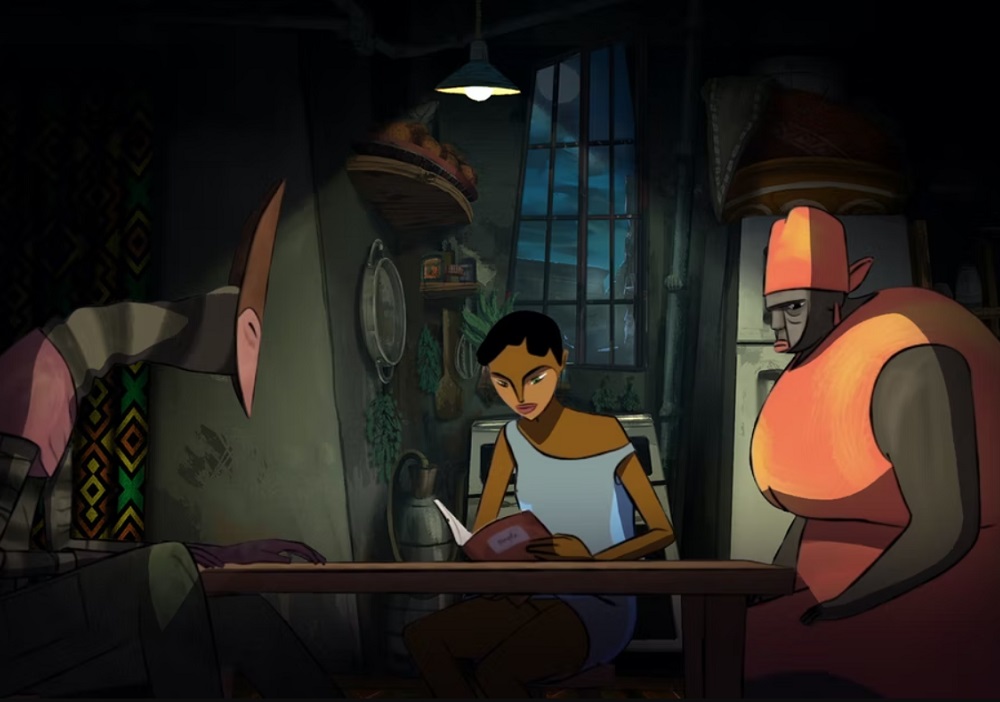
Nayola (2022) - On the second day I had planned to start with a different film, but life intervened. I enjoy animation and am tangentially familiar with Angolan history so I decided to give Nayola a shot - and I'm so glad that I did. It's an absolutely gorgeous feature that alternates between a more painterly animation for events taking place during the Angolan Civil War and a cell-shaded animation for the more modern sequences. Nayola is in no way an attempt at a strict history of the war but offers impressions of both the war and its aftermath through anecdotal episodes of the three women it focuses on. I expected it to get fairly grim, but I'm not sure I understood how surreal it would become - towards the end there are sequences that (if anything) recall early Lynch or the darker moments of Miyazaki's work. I thought it lost a little narrative thrust somewhere in the middle but it never stops being a joy to look at. One of the things you have to love about festivals is taking a chance on something you know so little about and this is one I'll definitely be recommending to people.

Showing Up (2022) - Kelly Reichardt's latest was one of the tickets I prioritized when planning my fest. I've long admired Reichardt's work even if I'm not a total devotee. I appreciate the elegance of her unhurried, naturalistic compositions though I'm not always deeply affected by them. Showing Up managed to hit me squarely in the funny, sad, neurotic sweet spot and I was totally taken with it. Michelle Williams works again with Reichardt playing an anxious, sometimes prickly, intense artist, Lizzy,  who is working on sculptures for her next show. Lizzy also works at a private art college (and for her mother) while renting an apartment from a fellow artist and school alumni (Hong Chau). There is an immaculate sense of place and community established in Showing Up that is certainly due to the incredible ensemble but is also deeply indebted to the location work - especially the former campus of the Oregon School of Art and Craft. Reichardt's caring familiarity with these oddballs allows her to find the humor in them but never with derision and her patient attention reveals both the frustration and the triumphs of the creative process. The finale nearly lands in screwball comedy territory - which I loved - but Reichardt reels it in to strike a more reflective tone very much in concert with her previous films. Showing Up is probably a movie you don't need me to nudge you towards, but I offer the nudge all the same.

Kokomo City (2023) - Essentially a talking heads documentary focusing on black transgender women who also happen to be sex workers. There's an earnest attempt at a more energetic style of documentary here, but I honestly thought the interviews with the women were more than enough to sell this picture. They are all excellent raconteurs with a great deal of insight not only into their own lives, but the community around them. I think first time filmmaker D. Smith's choice to feature women from at least a couple of different cities was a good one and helps broaden the perspectives on offer. There are also several interviews with men and while I see the larger point in doing so - I found them much less successful. Kokomo City is crammed with an eclectic selection of music and I have to give a shout out to the Stelvio Cipriani track showing up out of nowhere.

Day Three

The Beasts (2022) - A beautifully performed slow burner that is evocative of other rural/urban conflict films but never fully indulges in some of the more well-trod tropes. Denis Ménochet shines as Antoine - a relative newcomer from France to a remote Galician village where he and his wife (the also excellent Marina Foïs) are attempting to live off the land. The film opens with existing tension between Antoine and his neighbors over whether they should sell their properties to developers looking to build wind turbines where the village stands - and things only escalate from there. Antoine's primary antagonist is his closest neighbor Xan, who is played to such chilling effect by Luis Zahera that I continually expected things to get far uglier than they do. Despite this restraint, the sense of dread is pervasive and the threat is impactful when it does ratchet up. There is a significant structural shift later in the film that may or may not succeed with everyone and definitely contributes to the 137 minute runtime - this didn't bother me at all but I was hoping for a more emphatic finale. Going in, I did not realize that The Beasts was loosely based on actual events in Galicia and I can also recommend the 2016 documentary Santoalla as a follow up if you're curious.

I Like Movies (2022) - Very funny, uncomfortably relatable coming-of-age tale set in the Toronto suburbs in the early 00s. I Like Movies is centered on a film-obsessed, socially awkward teenager - Lawrence brought to life by Isiah Lehtinen - who is navigating his last year in high school and harboring dreams of attending NYU film school. After multiple attempts, Lawrence is finally able to get a job at his local video store where he forms a kind of friendship with his older manager, played by Romino D'Ugo. I Like Movies is very much a comedy but writer/director Chandler Levack is not afraid to get dark and Lawrence says some absolutely brutal things to the people around him in the way only teenagers can (and garners some brutal responses as a result). I was not Lawrence as a 17 year old and I came of age in a different time and place but it's hard not to find pieces of this that relate to my own experience. My understanding is that Levack transposed parts of her own life onto Lawrence and perhaps that will help a wider swath of audiences recognize themselves in the character. Of all the films I've seen so far at MSPIFF, this is the one that I think will demand an immediate re-watch from me just to catch more of the movie references that every scene is bursting with. I loved seeing the employee picks wall covered in Vinegar Syndrome releases including Beyond the Door III, Olivia, Dominique, and others. 

The Origin of Evil (2022) - I have sadly not seen Sébastien Marnier's previous feature but the comparisons to Chabrol and Bong Joon-Ho Origin of Evil was already garnering were more than sufficient to draw me to it. The comparisons are apt - it's a sumptuously shot, well performed, twist laden, and (naturally) class conscious thriller that definitely recalls both auteurs. I would also say that I caught some restrained De Palma vibes beginning with the Carrie-esque opening locker room scene to Marnier's use of split screens. There's a lot to like here and while I don't think Origin climbs the heights of something like Parasite or La Cérémonie - it's still incredibly entertaining and kept my tired brain engaged despite the late hour. Laure Calamy is excellent as a working class woman ostensibly looking to reconnect with her estranged, fabulously wealthy father only to find him surrounded by other influential women with their own agendas. In the end, I felt like some of the character motivations were unclear to me, but I still had a blast watching those motivations and machinations unfold. I'll certainly be tracking down his earlier work, but Marnier is officially on my radar as a creator of sophisticated, thoughtful genre pieces and that's something I could definitely do with more of.

Day Four

My Sailor, My Love (2022) - By Sunday, I was winding down a bit and decided to just go for a quick double feature beginning with this Finnish/Irish co-production. I confess a weakness for virtually any film shot in the coastal regions of Ireland and My Sailor is no exception. It features stunning photography of Achill Island, multiple rich golden hour moments, and aerial footage that manages to dispense with that overly-floaty drone feel that often makes modern films look like YouTube videos. My Sailor is also a solid family drama tackling the complexities of grown children and their (frequently) unresolved issues with aging parents. Veterans James Cosmo and Brid Brennan deliver admirable performances as two people finding each other later in life and the film is anchored by Catherine Walker who plays Cosmo's long suffering daughter. I'd only previously seen Walker in the very different film - A Dark Song - which I thought she was also excellent in. My Sailor does lean into the sentimental and I felt like the script was easily the weakest aspect, but everything else was done so competently that I couldn't help but appreciate it.

Mamacruz (2022) - Another Sunday matinee confronting the challenges of aging. While Mamacruz also deals somewhat in unresolved issues between parents and children, it's primarily about unsatiated sexual desire. Prolific actress and Almodovar collaborater, Kiti Mánver, plays the role of Cruz - a devoutly catholic grandmother who is coming to grips with her inner passions. She manages to accidently stumble across some internet porn and (rather conveniently) a therapy group for women looking for increased sexual satisfaction. These experiences help her put words and actions towards what she's feeling as she comes more into herself as a sexual being despite her deep religious convictions. Mamacruz isn't coy about its subject matter and yet it felt rather chaste to me for a film featuring genitalia covered in chocolate sauce or emitting glowing auras. I found it light and charming and particularly enjoyed the support group ensemble. 

I think that's more than enough for a part 1 of festival coverage, but I will be continuing to see more films throughout the week and will have at least a second part forthcoming.

Sunday, April 2, 2023

Best New-to-Me: March 2023

 I was listening to an interview with author/photgrapher/wanderer extraordinaire Dan Price where he said something to the effect that while it's good to have friends, it's important that they not become too much of an influence. That's something I think about a lot. I'm not that concerned with friends becoming too much of an influence on me, keeping in touch with people can be challenge enough, but I do try to manage outside influences as best as I can. I'm happiest doing my own thing and while I very much appreciate a nudge here and there, I don't do well following anyone else's curriculum. I've been truly satisfied with my movie-watching over the last month and a lot of that has to do with seeking out whatever has piqued my interest and not following up on too many outside recommendations. Of course, this "feeling" of self-determination is illusory to a large extent. I've watched collections curated by other people, my watchlist is teeming with films that have been suggested to me one way or another, and I'm at the whim of theater and streaming service programmers as much as the next person. Still, if you need someone to encourage you not to get caught up in hype or FOMO, you'll always have an ally here at Kino Ventura.

It wasn't a big month for theatrical viewings for me - some of that was scheduling and some of that was that I just wasn't particularly drawn to what was showing. I did get to see a nearly sold out matinee of Nights of Cabiria which was part of the Italian Film Festival at The Main Cinema. My first viewing of Cabiria was at the now defunct Uptown Theatre shortly after the film had been restored in the 90s. I had no idea what it was besides being a Fellini film, and I was absolutely blown away by what I saw. It remains one of my cherished movie going memories and it was a genuine joy to be back in a theater with people who either loved Cabiria as much as I do or were discovering it for the first time themselves. 

Symphony for a Massacre (1963) - Tremendously enjoyable crime thriller from Jacques Deray featuring some outstanding location work and solid performances. I loved the 60s-cool mood and the extended dialogue free sequences that held my interest as the various plot threads unraveled only to become thoroughly entangled. There's not a big mystery at the heart of this one, but Deray holds the tension brilliantly as the actions and motivations of the characters are unfurled. I confess I do not have a deep affection for the film-noir narration and much prefer this kind of quiet reveal. I also watched Deray's Le Marginal in March which is in many ways a bog-standard popcorn action movie but it won me over with Belmondo, Morricone tunes, 80s France, and some UNREAL stunt work. Deray put out some bangers.

Fail Safe (1964) - I'm not sure what I have to add after finally catching up to Sidney Lumet's sweat and suspense drenched political thriller. It's an absolute masterclass in polished entertainment that's also smart, dark, and disturbingly plausible. I've been meaning to watch it for years and I picked it up while browsing discs at the local library. It felt very much like the video store experience of years gone by which only added to my enjoyment.

Story of Women (1988) - Spurred to viewing by the Criterion Channel's curated selections, I watched a lot of Isabelle Huppert films in March including Chabrol's Story of Women. Set in occupied France, Story delivers a pragmatic and empathetic look at (mostly) women doing what they can to survive and occasionally thrive in a world turned inside out by war and fascism. I was reminded very much of the attitude towards sex, sex work, and the transactional nature of relationships found in French film of the 30s and 40s. This is not the moral rigidity found in American film of the same time and similar themes, it's the kind of attitude that comes from people who survived unjust times and emerged with understanding. Huppert is a delight and Chabrol takes what could have been a ponderous period drama and renders a briskly moving, entertaining, and no-less significant film. I also finally got around to seeing La Cérémonie which I (unsurprisingly) found to be fantastic and will undoubtedly send me on a quest to watch as many of the Huppert/Chabrol collaborations as I can.


Loulou (1980) - I confess that I knew very little of Maurice Pialat when I fired up this Huppert/Gerard Depardieu drama about desire and self-destruction. It's unhurried, it's bleak, and I can see not everyone appreciating Depardeiu's "charm", but I was totally taken with it. Pialat's natural style combined with actors of this quality makes for some beautifully rendered, immediate-feeling sequences that really drew me in. There's a final confrontation of sorts where Huppert attends a Sunday meal at Loulou's (Depardieu) family home that is believably electric with tension, danger, and some tragedy. I was also able to catch A Nos Amours from Pialat which takes his free-form approach and applies it to a brilliant coming of age performance from the (as of yet) untrained Sandrine Bonnaire. Amours contains a wild dinner scene of its own featuring Pialat raging as the patriarch who has managed to alienate himself so thoroughly from his family. Both movies are great and I'm looking forward to catching up with more of Pialat's directorial filmography.

Amateur (1994) - I'm not a year-round Criterion Channel subscriber but I like to pick it up for a month or two depending on what's being featured. Part of the reason I signed up last month was because they were including Hal Hartley's 90s crime oddity, Amateur, as part of their Huppert collection. Hartley's stuff has been somewhat out of circulation lately and I couldn't recall if I had actually seen Amateur when it was originally out on VHS or if the striking cover image of Huppert holding a drill was lodged in my memory. Either way, I'm glad to have watched or re-watched it. Idiosyncratic crime stories with deconstructed timelines and characters prone to spontaneous philosophical conversations were having their moment in the mid-90s. Hartley's film distinguishes itself from its contemporaries largely via Huppert's performance and a willingness to allow for reflective moments amidst the quirkiness and violence. The actors are fairly mannered but Huppert has some fantastic lines that rise above the deadpan delivery. There's also a nostalgia factor at work for me, not only with the actors and locations but perhaps most effectively via the soundtrack. Loaded with the likes of PJ Harvey, The Jesus Lizard,  and My Bloody Valentine, the sonic texture of Amateur definitely nails the decade. Hartley's films were notable releases back when I was tearing tickets at our local indie theater and I'd love to see some new physical media editions of his films.


The Daytrippers (1996) - Since the Fun City Editions release of Party Girl, I've been quietly watching and re-watching a chunk of Parker Posey's 1990s output. Of the new-to-me films where Posey has a lead or fairly prominent role, I think The Daytrippers has been my favorite. Independent film took on some different guises in America during this timeframe and while some of them were somewhat mid-tier budget films produced by a subsidiary of a larger company, Daytrippers is the real deal. Initially budgeted for around 50k, shot in 16 days, and heavily utilizing the apartments of the cast and crew as locations, Daytrippers is a film that only exists because a small cadre of filmmakers willed it into existence. The actors undoubtedly make the picture - Posey, Liev Schrieber, and Hope Davis give terrific early career performances anchored by a emotionally visceral turn from Anne Meara. Despite the limited means, Daytrippers looks more polished than you might guess. Greg Mottola along with cinematographer John Inwood and production designer Bonnie J. Brinkley (Slime City!) took real locations, shot them well, and made them look believable as opposed to the kind of sterile, soundstage vibe that low-budget films can have even when actual places are used. Admittedly the laughs aren't always huge and the ending feels like it could have benefitted from some more consideration, but there's a ton of heart behind Daytrippers and it's definitely something I'll return to. 

Sudden Manhattan (1996) - A much less heralded film also shot in NYC for no money at the same time as Daytrippers was Adrienne Shelly's directorial debut - Sudden Manhattan. Very much in the quirky yet dark, romantic comedy with elements of crime pantheon, but one that has been largely overlooked. Shelly is totally charming and I appreciated the screwball vibes even though I liked it best when it was more quietly strange. Louise Lasser delivers a riot of an appearance as the psychic Dominga - Ms. Lasser has a fascinating filmography having wrapped Frankenhooker  a few years before Suddenly and having Happiness and Requiem for a Dream come out in the years following. I'll be looking for Shelly's follow up film I'll Take You There and would love to see restored versions of both. 

An Unmarried Woman (1978) - Sticking with NYC for one more film, I finally caught up to Paul Mazursky's final entry to his phenomenal 1970s run of pictures. I adore Mazursky's movies from this period with both Harry and Tonto and Next Stop, Greenwich Village being longtime favorites so it really did take me a while to sit down for Unmarried Woman. Though this isn't an independent feature like the previous two films I mentioned, it is the product of a time when a studio would be willing to greenlight a modestly budgeted movie and sign near total control over to the director. So we have Mazursky firing on all cylinders here with a veteran crew composed of people he had worked with on previous films and a tremendous troupe of actors. Jill Clayburgh is perfectly cast in this and Mazursky is smart to keep his camera focused on her expressions and how she is reacting in scenes - it's her story after all. Great themes involving adult friendships and self-determination, Bill Conti contributes an excellent score, the funny parts land, the emotions feel lived-in, and I (naturally) love the setting. Something about seeing packed diners, parties, and city streets hits differently when my city is still definitely reeling in the hangover of lockdown. 

Bronco Bullfrog (1969) - A genuine obscurity restored and brought back from the brink of disappearing - Bronco Bullfrog is an astonishing document of working class youth culture in Britain at the end of the 60s. Director Barney Platt-Mills takes a documentarian approach and used non-actors to populate a very authentic feeling world of work, boredom, and rebellion. The actors exist somewhere between the working class interpretation of Mod and the nascent skinhead subculture of boots, braces, and youth gangs. Though they were frequent fodder for tabloid papers, there isn't a abundance of media capturing these kids closer to their own terms. That alone makes Bronco  compelling but it also works as an excellent counterpoint to the swinging 60s narrative that seems to be so dominant.


Gothic Fantastico: Four Italian Tales of Terror - I picked up this set of four Italian films released by Arrow last year and I thought it would be easiest to talk about the set as whole. I'm a fan of Italian Gothic but have generally stuck to the safe waters of Bava and/or Barbara Steele. I was interested in Arrow's set (particularly after their fantastic restoration of Mill of the Stone Women) but was moved to pick it up due to a combination of a good sale and Unsung Horror's episode covering The Third Eye. Franco Nero's first starring role - though Django would release earlier due to delays from censors - is probably enough to draw people to this set and The Third Eye makes for an interesting example of a modern gothic that dispenses with the cobwebbed corridors and crumbling castles normally associated with the genre. I think my favorites of the four are the much more traditionally gothic Lady Morgan's Vengeance and the other modern film in the set - The Witch. Lady Morgan is one half romantic mystery and one half supernatural chiller. There's an awkward flashback device employed part of the way through the film, but it still delivers on atmosphere and even treads into proto-gore territory. At one point Gordon Mitchell puts someone in an airplane spin and hurls them off a castle wall resulting in a splendid dummy drop. Maybe that works against the overall tone of the film, but it enshrines it as a classic in my book. Damiano Damiani's The Witch is set in contemporary (1966) Rome but manages to evoke a good deal of classic gothic spookery. It exchanges the ancient castle for a labyrinthine apartment building filled with secrets, death, crumbling manuscripts, strange family histories, and fractured reflections of reality. It's probably a little longer than it needs to be, but I was swept up all the same. The collection also includes The Blancheville Monster (1963) which is enjoyable if not as distinguished as some of the films that preceded it or would follow. My shelves are becoming more and more populated with Arrow sets and they do a terrific job - Gothic Fantastico is beautifully produced with one of Arrow's essay booklets and a poster. I've really enjoyed the film introductions and the video essays included but I haven't had a chance to check out the commentaries.


Sunday, March 5, 2023

Best New-to-Me February 2023

It's the conclusion of a short month in which my movie watching behavior diverged from the usual in that I didn't watch that many movies and that I watched a lot of not just new-to-me but actual "new" movies. The number of films watched was due to a combination of work and being distracted by other things but the watching of relatively recent films has everything to do with the Film Independent Spirit Award screenings which happen annually at the Walker Art Center here in Minneapolis. I believe that the only other organized screenings of the nominees is in LA, so it's very cool that the Walker and Film North have been able to collaborate on these and make them available to people. My other awards season tradition that I was able to keep alive this year was to watch all of the Oscar nominated animated shorts. This is something we usually do at the theater but our best chance to do so was cancelled on account of the tremendously shitty weather we've been having. I'd encourage you to catch them theatrically but they are all available online through a variety of sources. Incidentally, I haven't watched the Academy Awards in decades but for some reason I cling to these buzzy, awards season rituals.

The Rubber Gun (1977) - Kicking things off with an appropriately obscure, not-new film - The Rubber Gun - from Allen Moyle who would go on to make Times Square, Pump Up the Volume, Empire Records, and others. This is an extremely loose, student theater counterculture Canadian curio that is both fascinating and possibly irritating. It's mostly driven by the irrepressibly verbose performance from Stephen Lack that I found nearly impossible to reconcile with his famously deadpan aspect in Scanners. I confess that I sometimes overrate films based on their value as a document of a time and place while overlooking their shortcomings as an actual feature. It's entirely possible that I'm doing that here, but I love art weirdos of the late 70s and early 80s and I've also been fascinated with what the folks over at Canadian International Pictures are excavating. I think this is worth your time and would love to see a physical release (probably from CIP) with some extra features/interviews for more context.


All the Beauty and the Bloodshed (2022) - Speaking of art weirdos of the 70s and 80s, All the Beauty and the Bloodshed is a tremendous documentary chronicling Nan Goldin's opioid crisis activism, her personal biography, and tying in threads from the NYC Downtown Scene and the ACT UP movement. Laura Poitras' film keeps the focus firmly on Goldin's organization PAIN and their efforts to remove the influence, money, and name of the Sackler family from art institutions all around the globe. It's an important story and one that could have easily encompassed the entire documentary. However, I think the genius of the film is how it weaves in portions of Goldin's biography, her career, and her intersections with other artists and movements. Poitras lets Goldin and her work tell the tale and never devolves into a talking heads commentary (as much as I might appreciate John Waters or Jim Jarmusch or others playing raconteur). There's an exceptionally moving section detailing the Goldin curated exhibition, Witnesses: Against Our Vanishing, which is essentially narrated through archival footage and recordings of David Wojnarowicz. This film was a much needed message of positive, effective activism and gave me several more things to watch, read, and think about. It's easily the film I've recommended the most from everything I saw at the Indie Spirit Awards screenings.


Murina (2021) - There were multiple films concentrating on daughter/parent dynamics that screened for the Spirit Awards and while I think the best of them may have been Aftersun, I feel like Murina deserves some more attention. It's an incredibly assured directorial debut from Antoneta Alamat Kusijanović featuring a strong lead performance from Gracija Filipović. Shot on location on the Croatian coast, Murina is a frequently tense drama with some stunning photography - above and below the water - from Hélène Louvart. Louvart has shot some notable pictures including 2018's Happy as Lazzaro which also happened to be co-produced by Martin Scorsese. In fairness, filling my eyeballs with Mediterranean vistas before I walk out into the dark of a Minnesota February might have been enough to win me over but I think some really solid work was done here. Looking forward to more from everyone involved.

Police Python 357 (1977) - If combining The Big Clock with Magnum Force while injecting the result with strong Melville-ian vibes sounds like your kind of thing, have I ever got the film for you. Yves Montand stars as a cop defined by his work (and his choice of firearm) who finds himself in a cat and mouse game regarding a slain lover. Montand plays the the consummate professional but in a deeply alienated, solitary way. Even if you know the plot beats of The Big Clock, I think this is going to hold some wild surprises for you. The beginning simmers but the eruption had me gasping at times. I watched another Alain Corneau/Yves Montand collaboration last month: Choice of Arms. I found it a little slow at times and wondered why Catherine Deneuve had so little to do in it but Gerard Depardieu gives a positively unchained, physical performance which I loved. 


Wish You Were Here (1987) - Another directorial debut, this time from also actor and also screenwriter David Leland. I can't recall how Wish You Were Here wound up on my watch list, but I'm happy that it did. I do love a good coming of age film and the post-war English setting was convincing, but the real attraction here is the standout lead performance from Emily Lloyd - herself only 17 or so at the time. Emily's Lynda is rebellious, profane, and effortlessly charming as she torpedoes the staid middle-class mores surrounding her. 

Thursday, February 2, 2023

Best New-to-Me: January 2023

 New year, very similar me watching movies but making an effort to get myself to the cinema more often. I've got little talent for activism or advocacy but I do okay at trying to be the "change I'd like to see in the world." In this case: bundling up, hopping on the bus, and heading out to see movies. So far I made it out to screenings of EO, Holy Spider, Infinity Pool, and Women Talking. None of them rose to the ranks of my new favorite film but there's something commendable about each of them (seriously don't let Holy Spider blow past you if it sounds like your thing) and perhaps more importantly - I really enjoyed spending more time at the movies. I plan to spend even more time in darkened rooms with strangers in February due to the convergence of some absolutely killer local programming. The Walker Art Center will be running their Film Independent Spirit Awards screenings, The Trylon is running a poliziotteschi series, the Heights is doing their Film Noir festival with a focus on Argentina(!), and again the Trylon is hosting Dan Halsted showing his print of 7 Grandmasters which I wrote about for Persiphere. I'll run out of time and energy before I get to see everything I'd like to but I couldn't be more happy to log some hours watching great movies and (hopefully) seeing some familiar faces.

It's nice to feel some engagement with current films but I still wanted to focus older, new-to-me watches this month so here are the films that have stuck with me:

Back to the Wall (1958) - The final film I watched as part of Kino Lorber's excellent three film French Film Noir collection. I ultimately prefer Édouard Molinaro's other contribution to the set - Witness in the City - but Back to the Wall is still a superb noir film. Gorgeously shot with excellent performances from Gerard Oury and Jeanne Moreau but even the smaller parts were well realized. The set from Kino doesn't have much in the way of features but I'm thrilled just to have such terrific transfers of the films. 


The Cop (Un Conde) (1970) - Unrelentingly hardboiled, gritty French crime from Yves Boisset. The 70s is virtually synonymous with this kind of morally ambiguous, pessimistic, anti-authoritarian crime fiction and I'd argue The Cop does it as well or better than many of the films that would follow it. The cast is absurdly stacked if you're a fan of French and Italian movies of the era - Michel Bouquet is perfect and is backed by Gianni Garko, Michel Constantin, Adolfo Celi, Bernard Fresson, Françoise Fabian, and many others. I also have to mention that there is a positively savage dummy drop early in the film so you know it was going to make my list.

Armageddon (1977) - Directed by Alain Jessua and produced by and starring Alain Delon, my understanding is that Armageddon was a production set upon by clashing egos and on-set tension. The final film honestly feels a bit unfinished but it still had enough going for it that I'd like to seek out Jessua's other films. There is a metric ton of fantastic 70s European location footage spanning multiple countries, Jean Yanne's antagonist is compelling even where Delon falls a bit flat, and there's some wonderfully idiosyncratic music from Astor Piazzolla which may strike a familiar chord with 12 Monkeys fans.

The Magnificent One (1973) - I promise this is the last French film on the list but I had to include it due to sheer lunacy. Only Jean Paul Belmondo could convincingly play both a despondent author of cheap spy novels and the cartoonishly overblown parody of secret agent heroics the author dreams of in the same film. A lot of The Magnificent One is very silly and some of it is positively stupid - but it's also shockingly gory in parts. My mouth was literally hanging open as gouts of blood poured out of the machine gunned enemy agents. I'm a man of simple tastes sometimes. 


El Pico 2 (1984) - While I didn't participate in any formal challenges in January, I did challenge myself to try get some of my backlog of physical media watched. As much as Navajeros knocked me absolutely flat in 2021, I'd been putting off tackling the rest of Severin's Quinqui collection. Things got off to a moderately rocky start with the first El Pico film. I could still appreciate it but it didn't have nearly the same narrative explosivity as Navajeros, didn't use music and setting nearly as effectively, and while I don't mind a focus on family drama, I felt that it delved into a kind of cheap sentimentality. El Pico 2 takes things in a harder, darker direction, embraces that sense of place again, and kicks a lot of the schmaltz to the curb. Unfortunately I don't think you can have one without the other and they're deeply interconnected. Still, I think it's worth your time to watch both and if you're struggling with the first - don't skip the second. 

Cannibal Man (1972) - More Eloy de la Iglesia that had been sitting on my shelf waiting for the right moment. Cannibal Man is stylish, gruesome, and it teases out some interesting concepts around economic frustration, sexual frustration, and identity. It moves at an awkward, languid pace which feels at odds with the serial killer story at its heart, but it does add a certain surrealism to the proceedings. Though he continues to keep killing people and descending further into a horrific situation - Vicente Parras' Marcos does it with the least agency imaginable. It's as though he lacks any creativity or sufficient analytical power to either flee or face the consequences before things get even worse. I couldn't help but be reminded of Dahmer and his nightmarish apartment - though Marcos isn't driven by the same sex/death obsessions (and never does commit any cannibalism). It sounds as though Spanish censorship interfered with de la Iglesia's initial vision of the story which would have featured much younger actors to play Marcos and his more affluent neighbor (Nestor played by Eusebio Poncela) as well as featuring a more explicit homosexual relationship between them. I feel like that would have made for a more successful final product, but Parras and Poncela are still very good and the fact that you have a gay director with two gay leads portraying a story with some gay elements in Franco's Spain makes for a compelling cultural document. I highly recommend the special features on Severin's disc for this as well.

Hotel Fear (1978) - I was not an avid participant in Giallo January this year but I did make room for a couple including Hotel Fear which I apparently ordered a copy of and promptly forgot all about. One of a handful of films directed by Francesco Barilli who also helmed the fantastic The Perfume of the Lady in Black, Hotel Fear is similar in that it retains a few of the giallo elements but is more of a measured, hypnotic, dreamy kind of mystery story. It still delivers on the sleaze factor but feels much more in line with a psychological thriller than any sort of proto-slasher. You can absolutely consider me a Barilli fan - I only wish he had made more of these eurocult oddities.


Spetters (1980) - Hoo boy. I'm not sure what I want to say about Spetters and I already feel like I'm going to have to defend my impressions of the film. I picked up a copy some time ago on sale and just never found the moment to put it on. I didn't know much about it other than it was not the early Verhoeven film most people would point to as his best work. It's got a lot going on - it's a sports movie (motorbiking), it's a coming of age film about three young men, it's a believably working class story, and it's also very much about trauma and survival. Spetters has a surprisingly upbeat mood for a movie that is filled with pessimism and even sequences that are best described as horrific. The main characters are charismatic but unlikeable at the same time. The young men have bouts of misogyny, extreme homophobia, and brutality which presents significant barriers to investing in their story. Verhoeven regular Renee Soutendijk is as electric a screen presence as ever, but her character seems so ruthlessly opportunistic that she could be difficult to relate to. Bad things happen to these characters including a savage rape scene - the aftermath of which is not at all what a modern viewer would expect and one that Verhoeven received considerable criticism for at the time. Verhoeven's treatment of rape in his films is something I'm probably not qualified to write much about other than it occupies a particularly Verhoeven-ian headspace that is as much about power dynamics as it is about violation. He would go on to direct a related controversial scene in Flesh + Blood and then essentially make a whole film about it in Elle. I should mention that I don't think Verhoeven handles this particularly well in Spetters and I reject his premise here even if I see the kernel of something he would approach with clearer intent later. What I could appreciate about Spetters was the unflinching frankness of Verhoeven's presentation. People are stupid and they grow up in shitty situations and they do what they need to do to get ahead and sometimes they come out the other side better human beings - or at least more empathetic ones - but sometimes they don't come out at all. Maybe I'm being dazzled by Verhoeven's cinematic mastery - it's gorgeous, the music is amazing, the motorbike scenes are fantastic - but Spetters left me thinking and reading and feeling in ways not a lot of films do.

Monday, January 2, 2023

2022 - Year in the Rearview

 Another year has passed and I return to this too frequently neglected space. This blog initially grew out of monthly lists I was posting on social media and then has fallen quiet in part because of my ambitions to write bigger, more involved pieces. I'm hoping to get back to those monthly posts - primarily for my own writing and record keeping. I find I'm less and less enamored of spending time on social media or the internet in general and maybe this is the best platform for me. I'm hoping to post more regularly here but not so much that I burn out quickly. I very much appreciate when people stop by and I hope you get an occasional film suggestion or enjoy a bit of my rambling. Here is some of that rambling about my movie watching in 2022.

I watched far fewer movies in the last year compared to previous ones. My Letterboxd stats has me at 241 films for the year compared to well over 400 films during the peak pandemic years. Some of this has to do with burnout and I also quit logging films for a bit so I'm not sure if things got lost in the shuffle. I found myself unable to give my full attention to what I was watching at home and I developed the horrible habit of writing the "review" in my head during every film I watched. I couldn't give myself over to films and was losing one of the critical pieces of my enjoyment of them. I know some people chat or tweet or whatever else during most of the films they watch but that doesn't work for me - I needed to take a break to regain my focus.

Ex-Fest/Junesploitation - One of the things that helped me find my footing again was participating in Junesploitation from the fine folks at F This Movie! as well as attending Ex-Fest out in Pennsylvania. I've written already about Ex-Fest but that incredible event combined with a film challenge that wasn't terribly prescriptive was what I needed to get back in the saddle. I've got the list of everything I watched that month posted here

Cinéma Français - In all the previous years I've tracked my movie watching - I've watched a lot more American films than films from anywhere else - followed by some combination of Italian, French, English, and Japanese films in significantly smaller numbers. This year France took the brass ring in my movie watching and I'd actually watched more Italian films than US films until the past month. Some of this was natural inclination and part of this was an effort to watch more French crime/noir cinema. I've never done a Noirvember challenge - I'm actually not that huge of a fan of classic period American noir - but I thought I would give it a try with a specific focus on French "noir." The definition is a little fuzzier but there are some great lists out there, the Roxie in San Francisco has been doing an annual French noir film festival for a few years, and Kino Lorber recently released their first French Noir collection. It's been an interesting and rewarding journey leading me to finally tackle some unwatched classics as well as being introduced to some lesser known films ripe for rediscovery. 

Directors - There was a tie for my most watched director between Jean Rollin and Henri-Georges Clouzot this year. I cruised through multiple Rollin films during my annual October movie challenge - he's a director that it's taken a while for me to catch up to but very glad to have finally arrived. While I had seen Diabolique before and even Sorcerer I had never found the time to watch The Wages of Fear - I think it may have been in part due to length but whatever my excuse Wages is every bit as fantastic as its reputation would have you believe. The other Clouzot film that truly floored me was Le Corbeau - its depths of cynicism make even the most pessimistic American noir films seem nearly cheery. Although I only watched three of his pictures - the other director to make a huge impression on me was Jacques Becker. I was very familiar with his Jean Gabin starring gangster film - Touchez Pas au Grisbi - but had never seen Casque d'Or or Le Trou before this year. All three are absolutely stunning crime pictures and it seems like such a tremendous loss that Becker died so young.

Actors - It was neck and neck for a minute with Gabin but my most watched actor for 2022 is very appropriately Lino Ventura. I've already written a bit about Last Known Address and most of the Ventura movies I watched were predictably crime dramas. Crooks in Clover and A Pain in the Ass were my first comedic Ventura movies and I genuinely enjoyed both of them. Both employ a similar comic lever of Ventura being the tough, serious guy who gets increasingly frustrated at the shenanigans going on around him until he explodes in rage. Ventura's gifts as a screen presence and serious actor are undeniable but I had great fun with his lighter side as well.

Theatrical Experiences - I wish I could tell you that my movie theater attendance has returned to its pre-pandemic frequency but sadly I cannot. A major cause for that was the permanent closing of my favorite local movie palace - the Uptown Theatre. My first job upon moving to Minneapolis was at the Uptown (and Lagoon) and I still live about a 10-15 minute walk away. I have many, many cinematic memories tied up in that building and it remained a regular stop to watch new releases. However, I am still committed to seeing films in dark rooms with strangers and 2022 was a terrific year for that. I've already mentioned Ex-Fest and that was hands down my favorite. I may not be back in 2023 but I will be back.

New York Ninja (2021) - Brought to us by Tim Holly who delivers the always delightful Cinema of the Macabre screenings every Monday at the Emagine Willow Creek theater. I'd seen New York Ninja before but being able to share the experience with an audience as everyone catches ninja fever collectively is the best way to do it. There were buttons, some t-shirts, and a display of Sho Kosugi memorabilia on display as well.

The Man from Hong Kong (1975) - The only(?) known print of Man from Hong Kong came to us from the vault of Dan Halsted via the extremely cool Cult Film Collective at the Trylon. The CFC has been responsible for some of my absolute favorite screenings over the years and this was no exception. Jimmy Wang Yu kung fu swagger, cars smashing & crashing, explosions, free falls, lots of hang gliding, and George fucking Lazenby on fucking fire. Sheer madness. This was preceded by an in-person Cult Film Collective meetup that was part of their membership kick-off. I'm really looking forward to see what they'll do in 2023.

Across 110th Street (1972)/Report to the Commissioner (1975) - Two absolute bangers that I've been crowing about since I first saw them years ago. These were shown as part of a Yaphet Kotto series at the Trylon on 35mm and I think I told everyone I saw in the weeks leading up to the screenings to go see them.

Death Promise (1977) - Another rare 35mm print that I thought was in shockingly decent condition. I picked up the Vinegar Syndrome disc sometime last year and never thought I would be lucky enough to see it projected. Earl over at The Parkway Theater was able to get his hands on a print and it was an absolute delight to watch with an audience. Badass NYC karate vengeance over scumbag landlords is a combination impossible to resist.

Bring me the Head of Alfredo Garcia (1974) - We were visiting a friend in Portland so I naturally had to see what was playing at The Hollywood Theatre. I couldn't have been more excited to see that a 35mm print of Alfredo Garcia was being shown by the most excellent folks behind Wyrd War. I had not actually attended a screening at the Hollywood before but I was really impressed - great staff, great crowd, fun atmosphere, and a terrific exhibition of one of the absolute greats of 70s cinema. Weirdly we stopped at a bar later on the trip and they had Under the Volcano playing - I don't think this was an intentional attempt at a Mexican death trip double feature - but it was notable.

The Shining (1980) - Yes I've seen The Shining a million times and I've certainly seen it on the big screen more than once - but this was our chance to see it in a theater completely renovated as a Shining - themed space! The Edina Theatre closed during the pandemic but was sold to new ownership who gave it a complete overhaul. Not only have the individual theaters been given an update but whole place got a Shining makeover. There's a gold bar, red bathrooms, tile made to look like iconic carpet of the Overlook - it's a welcome addition to our local theater scene. 


The Demon/Il Demonio (1963) - One of my absolute favorite new-to-me movies from last year and one of the best films in the unparalleled folk horror set from Severin films - getting the chance to see Il Demonio theatrically just further reinforced its beauty and the power of Daliah Lavi's performance. This was part of a gothic series at the Trylon that also included Bava's The Whip and the Body featuring Ms. Lavi and Christopher Lee.

Solomon King (1974) - Another shout out to Tim (I swear I like the horror stuff too!) who screened this rediscovered independent blaxploitation jam. Deaf Crocodile ran a crowdfunding effort to help support their restoration of Solomon King and the backstory of the film, Sal Watts, and Deaf Crocodile's efforts are just as engaging as the film itself. The film is totally charming and oozing with style - seeing it with an audience is the way to do it if you get that chance.

I didn't initially plan to write so extensively about theatrical screenings but I'm really glad I did. Online communities are great and the availability of streamable or downloadable film does a lot to increase access but I've come to realize how critical in-person cinema attendance is to me. I was still able to make it out to some outstanding events in 2022 and I'm hoping to do even more of that in 2023. A huge, huge, huge shout out to all the programmers and theaters out there making it happen for us lucky film lovers. See you at the movies.


Editing note: I usually prefer linking film titles to Letterboxd but it took a massive shit while writing this so that's why there are a mix of IMDB links as well.

Tuner (2025) - Listening for Larceny

The jug-man, the box-man, the yegg—the safecracker was once a key component to any compelling heist thriller and one that has become increas...